Looking to acquire a company? Our sister firm A8 Advisory runs buy-side M&A. Visit A8 Advisory →

Why do mid-sized companies frequently implode just as they outgrow their early startup velocity? It rarely comes down to a broken strategic vision it happens because the organizational culture fractures under weight.
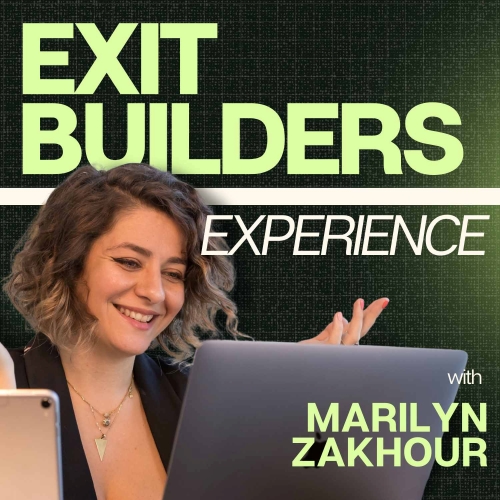
In this episode of Exit Builders, host Adel sits down with organizational design architect Marilyn Zakhour to decode the architecture of human systems. Drawing on multi-year field research conducted alongside Boston University’s Dr. Connie Hadley, Marilyn explains how to transition an organization from hands-on founder dependency to repeatable, systemic infrastructure. She breaks down the "Three-Gap" equivalent of corporate timing: trading arbitrary policy for high-impact team rituals, diagnosing the invisible drag of cultural debt, and moving the needle on psychological safety to engineer high-performing, decentralized teams.
If you are an SMB owner or a startup founder building an operation that needs to remain highly valuable, efficient, and orderly without you in the room, this episode provides a masterclass in structuring corporate time.
The single greatest roadblock to scaling past the startup horizon is the founder's personal failure to transition. Startups scale through brute-force individual effort; mid-market companies scale through predictable systems. If an executive cannot build written, automated, and ritualized processes—and subsequently step back to let those systems run they haven't built an asset. They’ve built a high-stress job.
Every company manages two distinct budgets: a monetary currency budget and a time budget denominated in minutes. High-performing teams outperform chaotic ones because they treat their recurring gatherings as strategic anchors. By systemizing your calendar across clear categories (Strategy, Performance, Learning, Connection, and BAU Operations), you build immediate, decentralized alignment.
Just like taking programming shortcuts creates technical debt, taking human shortcuts creates cultural debt. Tolerating a toxic top-producer or sidestepping structural transparency might keep the lights on this month, but that friction compounds exponentially. A platform-ready company requires clean documentation, explicit governance, and strong psychological safety from the early days to avoid massive remediation costs later.
"If a company fails to transition, it's because its leaders fail to transition. Founders need to go from being doers to designing systems—and then stepping back to let those systems operate. Time is a budget. Your organizational performance directly mirrors the beautiful basics of how you structure that time." — Marilyn Zakhour
[00:00:00] Thank you Marilyn, for joining us today and for accepting this invitation and for taking the time to share your frameworks, your knowledge, your findings, and specifically I invited you to join us because I haven't seen anyone talks about rituals and explains it as well as you do.
[00:00:20] Thank you.
[00:00:21] Yeah, so welcome on board.
[00:00:23] Marilyn. Please give us an introduction of what you do and Cosmic Centaurs and your who before we continue.
[00:00:31] Absolutely. So, hi, I'm Marilyn. Uh, I'm the CEO and founder of a company called Cosmic Centaurs. And what we do is organizational and capability and leadership development, which is a mouthful to say, um, that what we do is that we help leaders who are clear on what their strategy is, uh, but can see that their organizations are struggling to deliver on that strategy, um, to diagnose what might be broken or what's getting in the way, and to make the necessary changes to fix it. And thereby, hopefully having organizations that can deliver better results and are happier workplaces.
[00:01:08] Thank you, Marilyn. Thank you. So the first question, is why medium companies outgrow the startup atmosphere or the startup phase, but still fail at installing successful scalable cultural infrastructure?
[00:01:22] That's a good question.
[00:01:24] Yes, please.
[00:01:24] So. Okay. There's many, many reasons, but I think that if I had to summarize them, it's because, um, you know, I will say that if the company fails to transition, it's probably because it's leaders fail to transition 'cause who is a company, if not the people who shape it, especially in its early days.
[00:01:44] And what I've often seen is the biggest struggle from the startup life to the medium-sized ones leaders who need to go from being doers or being hands-on with what the company is delivering and the value it's creating leaders who actually need to design systems. And those systems can sound like process, culture, technology, choices, incentives, whatever they may be. And they don't know how to design systems and then step back from the system and let the system operate. Um, and so either they don't know how to design it or entrepreneurial characters actually hate systems. So every time they hire someone and they tell them, please come build this for me. They do, and then they'll break it without even noticing. So I think that the journey from small to medium size is as much a journey of market growth, um, as much as it is a journey of personal growth for the leaders that oversee the organization. I.
[00:02:49] this brings other questions as well. So you, you spoke a bit about the bias that founders and leaders have to hiring people that are like them, who like to have less systems because it gives them the freedom to be creative, make decisions quickly, and, you know, and move forward very quickly.
[00:03:11] So this also, offers or presents, an obstacle towards building a scalable system. So from your point of view, when it comes, or from your findings as well, when it comes to building rituals, what's the starting point? What are the key components that someone who doesn't like systems could start with?
[00:03:32] Okay. Well again, so either founders don't hire people like that or they hire them and then they get in the way of them doing their jobs. And so as you said, uh, we've always looked at how do we help, uh, leaders to build those systems and one of the research pieces that we've spent a lot of time on, in the last few years is what you were mentioning, which is a topic of rituals.
[00:03:54] So let me take a step back. I always say that. Any person in the company has two budgets that they can spend. One of those budgets is in dollar value or AED, whatever your currency is. And the other is in minutes. And when you look at an organization, we always say, follow the dollar, right? So if we look at what is being spent, like, what money is being spent on, we can see what the company's priorities are. The same is true of how we spend our time. So something that we've been looking at is how can we help leaders spend the time of their organization in more meaningful ways? And for the past three years, we've been researching together with Dr. Connie Hadley, who's a professor of organizational psychology at Boston University.
[00:04:39] This idea of rituals. Now, what is a ritual? A ritual can sound like a meeting so a standup, a retrospective, a weekly team time, whatever it may be. But the difference between a regular meeting and a ritual is that rituals are, um, frequent. They the entire group or community or team participate in them and very importantly, like every good ritual they have, meaning that we, when we congregate, you know, all of these words, they come to us a little bit from, the religious side of our lives.
[00:05:13] But when we congregate together, whether it's to run a standup, deliver a retrospective, celebrate a win, whatever it may be.
[00:05:20] We associate it with a sense of purpose and meaning and what we found is that teams that have many rituals, outperform teams that don't because they have higher engagement of their employees, they have higher psychological safety, which is a direct link to team performance. They're more committed to the purpose of the organization. They're less likely to want to leave their jobs.
[00:05:45] And so one way in which we often help leaders to create these systems or the structure is that we teach them how to structure time. Because in the end, the way that we choose to spend our time together is going to be a key element of how we deliver value and how we build high-performing teams.
[00:06:03] And what would be some examples you can share about what you've experimented with within Cosmic Centaurs and maybe some clients without needing to mention the names if you can. If you can, that would be great. If not then, but can you please share some examples?
[00:06:19] Yeah. So when we help leaders to think about how to build structure into the time that they spend, um, after many years of iterating on this, uh, we've really come to see that there are certain or certain categories of, those rituals that we need to look at.
[00:06:36] The first is, of course, rituals that relate to strategy and planning. so again, in a big corporate, these can sound like we need to submit our budget. We need to submit our plan for next year, but when they're treated as rituals, when we truly understand that, for example, this strategy and planning exercise is a way to express our collective ownership of the destiny of this company, that by contributing to it.
[00:07:02] We are each adding our own piece in terms of what the future holds and how we're gonna bring it to life. Um, that, uh, you know, a company's ability to execute is just as important as a strategic vision and that we dedicate time and effort to that. So one category strategy. The second is business performance. So it's coming together to review the performance of our organization. And I don't just mean from a p and l perspective.
[00:07:27] I also means this also looks at functional or operational KPIs. It also looks at our internal KPIs, whatever they may be. Again, for example, at cosmic, we come together, it used to be once a month when we were smaller, but now we do it once a quarter where we look at all of our KPIs. together, the entire organization. So whether you're an intern, you just joined us, you've been here since the first day, you're invited to this quarterly meeting where we're gonna look at our finances.
[00:07:57] We're gonna look at our marketing KPIs, our operational KPIs. We're gonna look at our KPIs per business line. We're gonna examine them together. Obviously we wanna celebrate some wins, but we're also going to see where are we falling behind and what do we need to do. And the fact that everybody gets to participate in this business performance review makes them feel like they have ownership over the destiny of the company.
[00:08:18] So that's an example. third category is business as usual. The stuff you need to like run the show, the standups, the retrospectives, uh, the weekly team meetings, the workforce planning, whatever they may be. But it also includes things that have to do with learning and engagement. So a fourth category is the learning category.
[00:08:38] So how often do you bring people together in your organization just to learn? Again, if we take the example of cosmic, and obviously we implement these in a lot of the organizations we work with, we have things like Grow Days, which is actually. Our next grow day is tomorrow, where the entire company stops delivering client work.
[00:08:57] We pick a topic that we wanna learn something about, and then we just spend the day researching and sharing what we learn. We have things like bootcamps where every week we have two hours of training on a key competency of the business.
[00:09:09] We have, uh, yearly external trainings that everybody's encouraged to take part in.
[00:09:15] And then the fifth category is the human connection or the engagement piece. So how often do we stop celebrate birthdays, hang out together, get to know one another. as either we have a game called Cosmic Conversations that we developed. I have one here on my desk, I'm just gonna quickly lift it up here you've seen us use this even in our conferences.
[00:09:32] It's just prompt questions, things to get to know each other better. We actually do this like every month or two, we'll stop and we'll answer a few cosmic conversations together. And just by getting to know what your favorite snack is or where you grew up, or if you weren't doing this job, what would you be doing?
[00:09:49] I start to build these strong relationships with you that make us a higher performing team. So when we help leaders to think about this, we kind of walk them through these five broad categories. I've rarely seen something not fall into one of them. And then we say, all right, what are you doing about this?
[00:10:06] Daily, weekly, monthly, quarterly. And suddenly we structure this calendar. And it's a lot of time to be sure. Sometimes people are a little taken aback. It's like, especially in leadership teams, when I tell a leadership team that they need to spend more time with each other, they fall off their chair.
[00:10:22] But actually we really argue that it's necessary, and when they start to use this time effectively, where they show up, they know why they're here, they know what the intention is, suddenly magic happens because they're spending that budget quite proactively.
[00:10:36] Excellent. Thank you. Thank you. You mentioned, on the fly while you said when we were smaller and now we got bigger. So how does that evolution of in size, and I have to highlight that our audience has a mix of leaders from SMBs and startups as well.
[00:10:53] So how does it differ, building rituals? And also there is something you touched on, which is in the corporate world, there are policies, right?
[00:11:02] So it's because the sheer size of the, of the business usually. Policies are, uh, they, they overrule any kind of human behavior or, uh, like human flexibility or thinking or freedom, which serves its purpose in large organizations because it reduces the chances or the risks of making expensive mistakes.
[00:11:25] Hmm.
[00:11:25] when it comes to SMBs and a set of policies, you need rituals, right? This, so how can you. How does the evolution go as a, your advice to me as a startup leader or as an S leader?
[00:11:37] Yeah, I mean, look at every scale there are different, um, methods and tools that work better. course, the smaller you are, the more autonomy everybody has. The more control over their scope, the less stakeholders they need to align. Theoretically the less politics there are. Um, it's the most simple version of the system.
[00:12:00] So, but I don't think that, because in some ways these things operate like fractals also, like yes, of course if you're the CEO of a global company, we're gonna have a different conversation. if you compare the leader of a startup. To what is their equivalent in a multinational.
[00:12:15] Then you're looking at a functional head or a country head or someone who owns one of the service or the business lines.
[00:12:22] Like there's always a scope of control that is at a very human level. then of course there's the scope of control that is at the. Kind of systemic level of a global multinational, where as a CEO of an organization like that, you're concerned with a very different set of things, but somewhere two or three or four layers below you, there's someone who resembles what would've been the founder of a startup that have control.
[00:12:44] And yes, policies are there, but policies are there to provide guardrails. They don't tell you how to manage a team or, or a department or an organization. They just tell you, usually they tell you what not to do. But not necessarily what to do. Um, so I think that at every scale there are things that remain the same.
[00:13:04] The power of human connection, the importance of intention, the choice of what kind of leader do you want to be, and how do you build the systems around you to enable that. And then of course, at different scales, you start to increase complexity, so you just have more things to take into account. You talked about policies.
[00:13:23] We can talk about country regulations. Again, the number of stakeholders you have to align internally and externally, so there's definitely an added complexity and how long it takes to make those decisions and bring them to life. But there's also a lot of things that are universal no matter what scale you're on.
[00:13:38] Thank you, Marilyn. Thank you. Now, when you're talking about rituals, I think of also my rituals for maintaining weight and losing weight and sticking to my exercise, uh, routines and stuff like that. So the thing is, any ritual we have, any routine we have. There is, it's like a leaky bucket, right? There is always, it'll keep disintegrating and I have to renew my commitment,
[00:14:04] Sure.
[00:14:04] for an organization.
[00:14:05] I believe it's also the same thing. So how do we make sure that, uh, within the right intervals, we revive the rituals and we make sure that they're fresh.
[00:14:18] Hmm.
[00:14:19] uh, adding value to the team without creating obstacles
[00:14:23] Yeah, what a great question. Actually, in our research we wanted to see what are the variables that impact a team's ability to sustain these rituals and to keep them alive. And um, we really looked at a lot of variables. The kind of company, the geography, the diversity of its team members. We looked at everything.
[00:14:44] The only variable that we saw statistically had real, like, tangible, you know, uh, relevant impact was whether that team or organization felt like they had an inspirational leader. and in our field study and in our survey, like in our, um, sorry, interview work, because surveys only give you numbers and then you need to be able to tell the story behind it.
[00:15:06] So we did interviews with more than 150 individuals and then we did a field study in an organization where we actually took a few teams and implemented rituals in those teams, but not in others. And we were trying to see what happened. And the one thing is you do need a strong leader. And a strong leader is strong because they have clarity of vision and purpose.
[00:15:29] They can communicate that to others and inspire them, but also they're very high on discipline.
[00:15:34] The same way that for your weight loss, um, you know, routine, uh, you do have to exercise a certain degree of discipline. That's also what we turn to leaders for.
[00:15:44] Leaders are our compass for what matters.
[00:15:47] So if they set these meetings and these rituals and then they cancel them, they're telling us. Actually, these are nice to haves. We'll only do them when we have extra time, but if we see that even in the midst of a client crisis or a problem or a supply chain issue or whatever it may be. Actually they double down on the time that we spent together.
[00:16:07] They're sending us the opposite signal. And also what we've recommended, and we have this outlined in our Harvard Business Review article on the topic we've recommended, um, how leaders can also make sure that these rituals continue to feel relevant and fresh, which is a little bit of what you asked me as well.
[00:16:24] And first, it's to co-design them with the team. So, not to make this top down, but to really say, okay, I would like us to have a moment together where we learn, where we have fun, where we review the business, where we develop the strategy, what would a great version of this look like for us? And to co-design it, but also to review it.
[00:16:46] So review your cadence. You, you try something out. It works for six months. Then, you know, 90% of those things you implemented are great, but 10% need changing. So having this idea of applying, you know, the, the iterative approach, even if you're disciplined, doesn't mean that what you did for a year is still going to serve you.
[00:17:07] So taking the time out to say, okay, what's not serving us anymore? What do we want to change? What makes more sense now, like the example I gave, which is going from monthly to quarterly because was enough. We've, we've grown to a higher level of stability. We don't need to look at our finances altogether every month anymore. And that was, you know, two hours back given to the team and maybe 15 hours back given to the person preparing this report. Um, so staying agile in terms of how we look at it and allowing people to innovate and to adapt. Um, but still being the leader who shows the way.
[00:17:41] Excellent. This is really helpful. This is, it seems to me that, uh, being, having a personal discipline as a leader is, is key as well to the success, one of the keys to success, uh, or to the success of implementing and maintaining a ritual. The other question or the other topic, I'd like to touch on is when you say cultural debt, this is a terminology you used previously.
[00:18:08] What did you mean by cultural debt and how does it impact us? As, as assembly leaders or startup leaders.
[00:18:17] Yeah, I mean, um, I guess that terms, the term for me comes from also this idea of technical debt, which I'm sure you're very, very, very familiar with. Uh, which is, for example, when we're building software, we sometimes take shortcuts, right? Like there are three ways of doing something, but option number A is faster.
[00:18:36] But we know that it'll break at some point. We know that it's not gonna sustain a cyber attack or it won't sustain volume or so on and so forth. And sometimes we make those choices consciously. And then sometimes, often teams don't realize that they have technical debt until something breaks. And so if you compare that to cultural debt again, it's what are those small trade offs that you're making on a day-to-day basis that are taking option A because it's.
[00:19:02] Cheaper and faster, but that are going to build up, you know, a culture that you don't want over time or a culture that you're gonna have to correct for sometimes that cultural death can sound like. And we've seen this a lot, tolerating toxic behavior from someone because they're a high performer. I.
[00:19:19] Uh, sometimes the cultural debt can sound like you are receiving feedback from your employees, but you're ignoring it because everything's still okay. We're delivering, we're fine. Like it's all good. Uh, it could be that you don't spend much time talking about the company's values or culture or how you wanna show up.
[00:19:36] And if you look at those elements like in a small period of time, maybe it's all right, like nothing's breaking. We're, we're still okay. work is still being delivered and so, so on and so forth. But as time goes by and you start to look, it's like the rate of, innovation or the speed at which our processors doubled in capacity.
[00:19:55] Like, at first it was like really tiny things and then. you zoom out, that compounding effect ends up, you know, looking like an exponential. Um, and so this is what cultural debt is. And as leaders, I think that we are actually managing a lot of different debts or a lot of different risks, if you wanna call them that.
[00:20:12] There's a really beautiful podcast, by the founder of, sun Microsystems, about how leaders, uh, or founders are constantly trading off one type of risk for the other, right? for example. We'll increase our financial risk in order to reduce our market risk. Like we wanna put out a new product, so we'll spend money investing in it, but now we have less cash flow or, we'll, increase our cultural debt or our cultural risk.
[00:20:38] In the face of whatever. 'cause of course we can't be perfect at everything all the time. but culture is one of those things that people may sometimes ignore for longer than required. And then steering a ship back, um, much later in the process is really difficult. for example, one of our clients actually hired us really early on, and, this is someone who came from a really successful large corporation that was like from the outside, incredibly successful financially.
[00:21:06] Did really well. They started a new organization and they contacted us really early on earlier than most people would've to talk about culture. And I said, I just wanted to understand their intentions. And I said, like, why are you doing this? It's, it feels a bit early. Why are you prioritizing this now?
[00:21:24] And they said, look, I've been in a company where I ignored this for a long time because we were making money and by the time I needed to. Steer the ship in a new direction. It was so big that I just didn't even know where to start, and I don't wanna make this, mistake again. Uh, and that's a really great example of a leader who suffered from cultural debt and used that in order to, um, to have a new story in their next role.
[00:21:51] It's amazing that that means, you know, the saying that do things right the first time. It's, uh, it applies here even though some people might argue against it, including me at some point of time. But this is, thank you for sharing this. This is definitely something to think about.
[00:22:08] How small issues around trust, clarity, or values can quietly slow everything down?
[00:22:14] Yeah. Thank you for that question. a lot of the time when I tell leaders what needs to happen for them to have a high performing culture, I tell them that it's actually really about getting the basics right. And here I wanna refer to our work in psychological safety. So I don't know if you know this Adel, but we are the only, certified practitioner of psych safety in the region and the Arabic language partner of the Fearless Organization scan.
[00:22:44] And so we do a lot of work with people around helping them to, to improve the psychological safety of their teams or their organizations, because psychological safety is one of the few. Metrics, engagement metrics, uh, that are directly linked to performance. actually, if you break down, what psychological safety is about, it's about creating an environment where people feel like they can speak up, whether they're speaking up with an idea, whether they're speaking up with a challenge, a concern, and that they will not be punished for it.
[00:23:20] And the reason why this matters is because if you. If you, for example, admit a mistake, then you can learn from failure. If you learn from failure, you'll see that actually you can share your ideas without fear of being judged or made fun of.
[00:23:33] And if that happens, you become more innovative and better at decision making. then when we open the hood of psychological safety to say like what sits under it, like how do, I grow the psych safety of my team? that sounds really great, Marilyn. How do I do that? It is actually about getting the small basics, rights and psychological safety looks at four, sub-domains as we call them.
[00:23:56] The first is if people feel accepted for who they are. Are they rejected for being different? Are there or are there ideas welcomed? And, is there individuality invited into the team? Are people willing to help each other? You know, a lot of the foundation of trust is actually collaboration, compassion, and solidarity.
[00:24:13] So are people willing to support each other if they needed help? And are they willing to jump in with their unique skills and talents if they're needed? We look at the response to risk and failure. So if I fail on this team, how am I treated? What happens? Do I get punished? Am I blamed? Or do we jump into problem solve together?
[00:24:32] Do we know how to separate between good and bad mistakes and how to deal with them and do we have open conversation and the data? So if we try to look for research that says, alright, so how do we fix these things? Actually the data points as to really small behaviors.
[00:24:48] So there's this piece of research published in Sloan where the psych safety score of a team went up by 12 to 19%, just because managers took time to actually meet with employees one-on-one and get to know them better and treat them as unique individuals, for example, because I learned that I needed to give you Adel feedback differently than I would give it to Selma or whoever's on my team.
[00:25:13] because I learned your preferences or how you like to be briefed or if you're a morning person or not. So I could decide if I should put our meeting at 8:00 AM or 6:00 PM that's an example. Another small practice is managers that help their teams remove blockers. So rather than say it was your job to finish this, they say, alright, let's look at it.
[00:25:31] What's getting in your way? How can we fix it? own research team rituals can increase psychological safety scores by 20%. It's a ritual isn't really a lot. It's taking a meeting that you have and transforming it into something more meaningful.
[00:25:44] Actually a lot of what we need to get right, um, is those ordinary little details.
[00:25:50] It's the beautiful basics. If you get those small interactions right, you don't need the big stuff because then just people just feel happy coming up to work. They're productive, they're not afraid of their mistakes. They learn from them and they become more innovative.
[00:26:06] Thank you. Thank you, Marilyn. This is very enlightening. And do you have any metrics, any kind of like, uh, detectives that you implement or put in place where you can detect the early signs of bad behavior, mistrust, dysfunctions, uh, that you can address very early?
[00:26:24] Yeah. Thank you for that.
[00:26:26] Look, I mean, I think there are a lot of, again, engagement metrics, psych safety being one of them. You can look at employee net promoter scores. You can look at job satisfaction, to stay, employee turnover, like there's a million things there.
[00:26:40] I, I think that the really, really early signs, is people telling you. And you having created a space where they do tell you, because when you have to wait for HR to run a survey and then get the data, it's kind of too late.
[00:26:57] What you wanna do as a leader is to create a space, not for people to complain, because then you can also fall into toxic behavior of people thinking that need to constantly be happy, comfortable, it's okay to be overwhelmed, work hard, uh, have a tough day. Like we, we are not trying to create an environment that is sanitized.
[00:27:17] We're trying to create an environment that is safe to learn and grow. I. Right. Our goal is performance, not safety. Not like, oh, never triggered by anything at work, so, but if you wait until the survey comes out, I feel like it's already late. You wanna create an environment where people can come talk to you about these things. You don't necessarily have to agree with all of them. But if more than one comes to talk to you about the same thing, you can go from this was a single event to this was a pattern. And I think leaders that see these things are great systems thinker because they can go from, oh, like I saw this small thing, like this employee, this happened.
[00:27:54] They said no to a project. Whatever. Oh, they've been absent more often. I can see they don't have their usual energy. Oh, they complained about something like what happens often is like people just refuse to see what's underlying those events. They don't wanna connect the dots and so they ignore them for a really long time.
[00:28:12] But the right way to do it is to like look at these little things and then see if there's an underlying pattern or mindset or system that you need to change. And honestly be open about reacting to it. Um, and just also even bring it to the team. Like say, I have noticed this. Uh, or three of you gave me this feedback.
[00:28:31] I'd like us to think about how we do it better. It's also why we love rituals like retrospectives. Which are moments when teams comes together not to talk about the work, but to talk about the dynamics of the team and their process.
[00:28:43] That's, for example, a great way to surface really early feedback where someone's saying like, oh, I don't get included at the right time in the project, or actually Adel, I don't like how you brief us, or, this person's misbehaving.
[00:28:56] And if you've created enough psychological safety, then people will just say these things in the room. They don't need some metric, um, that is hidden behind anonymity.
[00:29:06] Amazing. Excellent. Thank you so much, Marilyn, for sharing your knowledge, your findings, your frameworks. If someone wants to learn more about you, what's the best way they can?
[00:29:17] Yeah, as a company we're very committed to sharing everything that we learn with the world. So there's a few ways that you can learn more. You can obviously follow us on LinkedIn, which is where we post a lot of our content, and you'll see that we're, we keep ourselves really busy, trying to share some of this knowledge.
[00:29:34] And on our website we have more than 300 articles. We have a podcast called Center Stage, and we have a two things, two resources that I think are useful.
[00:29:44] One is we have a ritual bank, so if you want inspiration on rituals to run with your team, you can find, I think more than 60 different examples on our website.
[00:29:53] And then we also have a page where you can download a lot of our methodology and frameworks and worksheets, for free, just to use it yourself within your team. So whether it's how to run a retrospective, looking at internal comms, thinking about culture and values, whatever it is. We have something there for you that you can, use as a starting, and that would be on CosmicCentaurs.com.
[00:30:14] I will make sure that we add the link in the captions in the description of the episodes as well. Thank you so much, Marilyn. There is one question we usually ask the guests as 50 years from now, what do you want Marilyn to be known for? Or people talking about Marilyn saying.
[00:30:31] Well, I mean, I will, um. Say that it's what I started Cosmic Centaurs for, which is I hope that they say that, we know I, and we, I think, the company is bigger than me, have found ways to inspire leaders and give them the tools that they need to build happier workplaces. I'm a child of a divorced mom.
[00:30:52] She used to have two jobs. I barely saw her. but because she was so joyful and so committed and intentional about her own leadership, she loved work and she instilled that value in me. And I think we spend most of our awake time. I don't know if AI will change that and we'll be spending our time doing nothing, but I think for a long time we'll still be spending a lot of our time being productive and working. And so I hope that I've managed to move the needle on building happier workplaces.
[00:31:22] Amazing. Thank you so much. This is really inspiring, and hope to see you again soon. Uh. A few months or a year. So really appreciate everything. I'll share the links again, uh, to the audience, uh, so that we can have access to all of these resources that you mentioned. And definitely the rituals bank. I'll definitely use that.
[00:31:42] So for sure.
[00:31:44] Absolutely.
[00:31:45] Thank you.