Looking to acquire a company? Our sister firm A8 Advisory runs buy-side M&A. Visit A8 Advisory →
Why do companies with great ideas and aggressive funding fail to build sustainable momentum? It doesn't usually happen because of bad product design—it happens because executive teams fail to connect creative vision with repeatable, systemized execution.
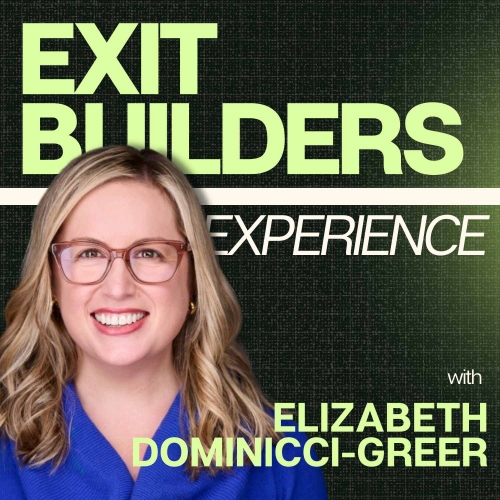
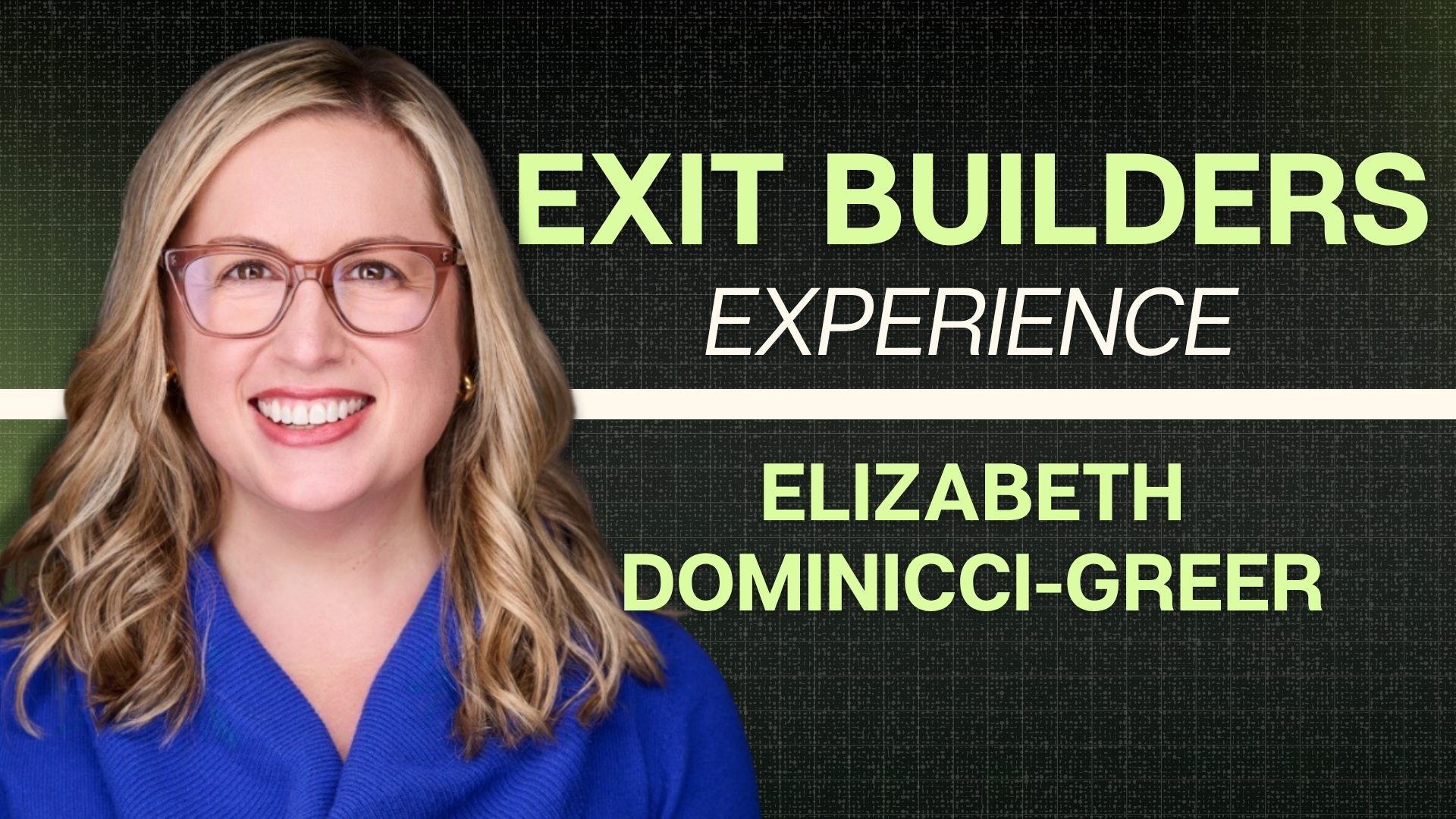
In this episode of Exit Builders, host Adel sits down with global operations authority Elizabeth Dominicci-Greer. Drawing on her industrial and systems engineering background, her time at Accenture, and her experience managing a 400-strong global team, Elizabeth demystifies the mechanics of scaling cross-border organizations. She details the metrics-driven architecture of "Volume, Velocity, and Quality," unpacks the operational realities of building an asynchronous, decentralized culture, and explores how modern artificial intelligence is reshaping institutional knowledge retention.
Whether you are a startup leader designing an operating model or an established enterprise executive structuring an asset for peak efficiency, this episode provides a masterclass in building operational endurance.
An organization cannot scale on raw, creative vision alone. A high-conviction Chief Operating Officer acts as the execution arm of that vision, converting abstract concepts into repeatable, documented processes. Longevity is engineered by defining every strategic target with strict performance tracking—stripping sentimentality out of operations to focus entirely on systematic outputs.
Managing a global, borderless workforce requires shifting away from visual presence metrics ("desk time") toward clear output accountability. High-performing remote organizations construct standardized baseline parameters—Volume, Velocity, and Quality—giving employees the flexibility to execute tasks on their own timelines while keeping global operational standards perfectly consistent.
Relying on a single domestic location or highly concentrated tech hubs exposes an asset to localized disruptions like grid failures or extreme weather. Modern corporate architecture avoids this vulnerability by deploying cross-trained, international "pods." By documenting tribal data inside centralized, AI-enabled knowledge portals, tasks can seamlessly transition across global regions without missing a beat for the end customer.
"I work really well with the visionary, creative type because the COO role is the execution arm of the vision. I turn vision into reality by measuring volume, velocity, and quality along the way to ensure the business is scalable and built for longevity. If you don't take care of your staff, it will cost you far more money in the end." — Elizabeth Dominicci-Greer
[00:00:00] thank you, Elizabeth, for making the time and appearing on the show. we've met during a Stanford program called Emerging COO. And I enjoyed working with you. I've got, had the privilege of working with you, interacting with you and, seeing you in action and learning from you as well with your experience, scaling up a company and, building the operations of a company, building a scalable operation.
[00:00:24] so we'd love to learn more about your background. What got you into the area that you're in? Why operations management? Why COO? What advice do you have for the audience?
[00:00:36] Yeah, first off, Adele, thank you for having me. it is, it's just so nice to be here and we did, we met during our Stanford program, called the emerging COO and that program put 50 people from across the world all together, to talk through operations. And you asked me the question of, Why operations?
[00:01:00] Why am I so interested in it? first and foremost, I have a industrial engineering background, so I love making sure things are efficient. You have throughput, and you're able to streamline processes, uh, with that background, I went into the systems engineering side and I have done in my background. Things from working with big major corporations, being a management consultant with Accenture. I've done my own consulting firm and worked with startups and venture capital firms. and most recently I've spent the past, uh, 9 and a half years. Actually working in corporate America for companies that do HR benefits and payroll for small businesses, specifically in the U S. and I left that to a new startup that is focused on HR tech to be the COO there. And so I've got everything from that, like big corporate experience, being a consultant for big companies, consultant for little companies, and now being the COO of a tech startup. and so it's a pretty wide range, but what I have figured out in my journey, Going back to the Y operations is that I work really well with somebody that is the COO, that is the more visionary, the more creative type. and then I'm able to execute that vision. And so for me, the COO position is the right one because it's the execution arm of the vision. I'm not the creative one to come up with the vision. But I can turn that vision into a reality and I can measure every KPI along the way to make sure it's not just a reality, but it's scalable and it is has longevity as well. that's a little bit about my background and why operations.
[00:03:05] I'm curious as well. One of the things I we had a discussion about this before is that there are startups that are based in Silicon Valley, and then there are startups that are not, startups that are based in Silicon Valley. They have different dynamics, different resources, different expectations, different outcomes.
[00:03:24] Pace of development, which is not necessarily good or bad. They each have their pros and cons,
[00:03:32] but, but yeah, if you can't touch on this, is your startup based in Silicon Valley now or outside of
[00:03:39] yeah. So the word based is such an interesting concept, because typically it means there's a headquarters or there's, a central location of most people. and so we have one of the three founders of the startup I'm with is located. He physically lives in Silicon Valley. But he's the only one. everybody else is all over the world, quite literally. So one co founders in Amsterdam and another co founders in Seattle. I'm in Nashville, Tennessee. We've got our developers in Mexico and in India and just all different places. And as we're looking to hire, And to scale the company, we will be using a worldwide remote model. and there's, there's different companies you can use to make sure that you're hiring the best talent. But for us, that really is why we want to have the best talent. We don't want to be confined to the fact that everybody has to be driving distance to a certAIn building to come in and sit at a desk. you know, in the post COVID world that we all live in right now, there's so much technology. I mean, the fact that you and I Adele are doing this podcast and we are worlds apart. Uh, in very different time zones, it's nighttime for you. It's morning for me with my coffee and we're able to do this.
[00:05:14] So technology is really enabled, uh, both having the right talent, but also being really efficient when you're a remote team, the thing that I have found, and I know we're going to get into this is it takes very different leadership skills to manage a remote team. Make sure you're building a culture because I've listened to some of your other podcasts, Adele, and you talk about that culture of a startup and having that culture get built, it takes a lot more intentionality when you're remote because you're not building culture in the olden days where you just put a ping pong table or video games in a physical office, or you didn't tie people to their desk by not.
[00:06:04] Literally, but by doing their laundry and bringing in food all day, where they just work and code all the time, being remote, you have to have a lot more trust and you actually have to really be intentional about how you're going to build that culture. Yeah.
[00:06:21] you mentioned as well, that the team are all scattered around the world. So governing that agAIn, with the different time zones, what's the approach that you follow to make sure that you hire the right people? You everyone stays. It's not only when the team is small, it's you managing the team.
[00:06:41] But as the team gets bigger, how do you ensure as well that the new leaders, the emerging leaders, they follow the same approach.
[00:06:49] Yeah. So I've done this a few times. so I took, at my previous role, I had 400 people that reported into my organization, operations, service delivery to customers. And we started off US based prior to 2020 when the pandemic hit and COVID became a worldwide thing. We exited our buildings, sent everybody home. But everybody was still US based. And over the next three, four years, we started to globalize. So by the time I left that role, we ended up having folks in South America. We had folks in the Philippines. We had folks in, India. We had folks in Poland. We had folks in various places. and we really had to change our culture.
[00:07:40] And a lot of it was through managing performance to metrics. So knowing your metrics, it wasn't just, Hey, my manager sees me sitting at my desk. He knows I'm here. It really became, okay, here's the work that everybody has. Are you delivering it on time? Is it quality? And how fast are you able to get things done? And then how much volume can you handle? And it really, it puts the onus on the person to get their work done. But then we also had to build using technology, a lot of channels to be able to get answers. So knowledge management platforms became so key for us because when we were in an office. Folks could just stand up, walk to somebody else's desk and say, Hey, I have a question.
[00:08:33] Can you help me answer this? Well, when you're remote, you can't do that. So we actually had to build, almost like chat rooms, if you will. If you think about Slack, Microsoft teams, any of those areas, we had to build chat rooms and put an expert. In a room or a virtual room have folks know where to go to get answers and then also started to get things out of people's heads. So we took what was, inherent knowledge that people just carried around in their head. And started to get that out into documentation to build knowledge, articles, knowledge, portals, and fast forward. Now we're at the very end of 2024 when we are talking at all, it'll probably be 25 by the time people hear this, right? And now we have AI. So not only do you have to, did we have to write down knowledge articles and then people had to know how to find it. Now you're going to have a world in which AI exists and you can find information faster, easier, which is going to make remote working more successful because you won't have to be searching for answers or looking around. the other thing I will say. is that when you're building those remote teams and really building the culture, it's also really important you have certAIn what I consider core hours. So that way everybody knows, Hey, from like 10 to 11, this time zone, and it might be seven or eight o'clock your time zone.
[00:10:12] It might be different hours, but like for this one hour, no matter where you are, that's the hour that we all come together and do a quick standup meeting so that you can see each other. Because even when you're remote, what you don't want to be, you don't want to become anonymous. You don't want to become faceless. And so it's really important to still have that, touch point. Whether it's just 15 minutes once a day, whether it's like for an hour once a week, it's really important to make sure that we humanize. and what it does when you humanize and when people are working in different locations, you get to learn about cultures and what we found in my previous role and where I am today, you start to respect folks. And you start to break down barriers of, oh, you're this country or that country, or you have this politic or this religion. No, we are all working towards the common goal of this company. We're all human. We all wake up. We all go to sleep. Most people drink coffee or tea or some beverage, right? and we all have family. And reaching the commonalities has been really important for us as well.
[00:11:37] You mentioned having to Appear in meetings and having them. Yeah, agAIn, the closest thing to a physical meeting as a video meeting.
[00:11:47] That's right. Yeah.
[00:11:50] especially here in the region as well. There are, some culture cultural barriers where, for example, some people will take advantage of. I don't need to be in front of the camera.
[00:12:01] I don't need to be. How do you deal with, I don't know if it's the same over there
[00:12:07] It is.
[00:12:07] how to deal with it.
[00:12:09] Honestly, it is, the same here in the U S I've found it even in European countries and in South American countries as well. because folks, right now you can see my office background, right? I'm on a lot of video calls. I put up wallpaper, right? I have physical wallpaper, but for the most part, what we're trying to do is make sure. Folks feel like they can be themselves. and so what we really had to work at, this took a lot of work, was you can put up a custom, faux wallpaper, all those digital wallpapers, have it be your personality. But also, we had to really normalize the fact that not everybody even had a desk. We had people sitting on the floor, working at like a coffee table. making sure that everybody had, uh, when we were remote, we were shipping desks and chAIrs all over the place just to make sure everybody in their home had a place to work was important, but then what we also did, and I even did this, I don't have it on today. We sent everybody baseball hats. In the U. S. At least. And you know, we would say, look, like, I don't care if your hAIr looks good. I don't care. You know what you look like, put a baseball hat on your head. We want to see you and talk to you. and so that that also started to normalize it. The other thing we did is we mAIled sunglasses to everybody. And we would take digital photos of everybody on the screen wearing the same sunglasses. Somehow it made them feel like they belonged. And, you know, we, we'd had themes around our culture saying the future is bright. And it was bright, so you had to put on your sunglasses. Or, We really tried to make sure, now that you see people from the shoulders up, we were not judging that.
[00:14:09] And we don't care what the background of your house looks like, just put a faux background on. so that we were trying to normalize the fact that everybody was equal. and fun fact about me, Adele, I'm five feet tall. You and I have never met in person. We've known each other for three, four years, and we've never met in person. I'm only five feet tall. I don't know what that translates to into the metric terms, but it's short. Let's just say I'm short. but what video chat and working remote has does it, it's normalized that you and I right now are the same height, right?
[00:14:47] Yeah,
[00:14:47] You and I have the same experience. Soit's equalized things in a way that you might not have when you're in a physical office.
[00:14:58] When you're in a physical office, every culture has this. You judge based on appearance, first. Then you judge based on intellect and speak, right? Or spoken word,
[00:15:11] how humans are. Yeah.
[00:15:12] Yeah, and it's just human nature. And so I'm a huge fan of remote working. I'm a huge fan of making sure that we can equalize and really be accepting of all. but you do have to be able to see each other because otherwise you end up really like hiding behind stuff. Now, don't get me wrong. There are days I don't want to be on camera. There are probably days you don't want to be on camera, in various cultures, right? There's just different things people have going on. So that's why we really keep it to, okay, here's the 15 minute slot. The rest of your workday, keep your camera off, right? And so we have very specific rules. I'm not going to say rules, guidelines, around it. Yeah.
[00:16:04] Nice. this is really helpful. I like the idea of the sunglasses
[00:16:08] because, yeah,It helps when you start something new. So there is a level of excitement that's introduced to the whole routine, which lightens it up. But at the same time, enabling people. It's like you remember we had discussions where sometimes in meetings you and I have to On purpose, say something stupid
[00:16:28] Yes.
[00:16:29] that people would lower their guards down and feel a bit more comfortable,
[00:16:34] That's right.
[00:16:35] admitting to a mistake publicly and saying what we learned from it.
[00:16:39] Now, having that same approach, I think, I wasn't sure whether it would be applied to different cultures around the world, but since you're based in the U S and now also you're experiencing people from Europe, from Mexico, from all of these different cultures.
[00:16:56] Are there any other barriers that you're facing like, uh, account related to accountability, assigning tasks, men versus women, titles, playing a role.
[00:17:07] Are there any other things you discovered and you have these little tricks
[00:17:12] We do. Yeah. So I will tell you this. When we started to globalize a few years ago in my role, we started to see cultural differences across geographies, uh, really come to light. and so we had to come up with different techniques to handle it. for example, showing up on time to a meeting. Is very culture specific. There are certAIn cultures where running 20, 30, 40 minutes late is okay. Or, you know, there's just cultures where in certAIn geographies where we found where they didn't have consistent wifi access.and so we really had to like pay attention to, okay, what types of, rules are we going to have to put in place or tracking mechanisms are we going to have to put in place just for like punctuality? Right and then we really had to start questioning. Does it matter right now when you're on video and you're having a meeting? Yes, it matters, right? Because you're, you're being respectful of people's times, but in terms of getting tasks done. Or work completed. No, it doesn't matter. Just because previously we all had this notion of you showed up at work in the morning, you worked for eight, nine hours, and then you went home, doesn't mean that that's how it has to be.
[00:18:43] and so technology has really allowed us to start saying, okay, here's the, the volume of tasks we can give out per person, and then you just have to get it done in a 24 hour period, right? and so if we have some folks that needed to, pick up kids at school that had to take care of elderly parents during the day, And then they could do more work later at night.
[00:19:11] And that is cross cultural different countries. We found culturally had different, um, family relationships or family responsibilities, right? and then you get the differences between men and women and different cultures as well, where maybe the woman I'm even like, this wants to cook dinner. and so they've got to like, have that very specific timeframe or they are putting the kids to bed. And then they can do a little bit more. And so giving that flexibility, we found, enabled folks to actually be retAIned more. So as a leader, I've got a couple goals. I want my employees happy and I want to keep them. Because the cost of having them exit because they found another job because they were miserable, right? And then having to hire somebody new and trAIn somebody new and then get that new person acclimated to the team. And then the team gets acclimated to them. That cost. is so much higher than just keeping the employees you have happy. I think that is the number one thing people get wrong in leadership. I think they, I think a lot of folks, especially in the startup world, Adele, I've seen this more and more where in the startup world, we're just trying to produce a product, get it out to market, get people to buy it. We forget that we also have to take care of our staff.
[00:20:43] Right? We have to take care of our employees, and if you don't take care of them, it'll actually cost you more money in the end. Yeah.
[00:20:52] every time you, no matter how much we try to retAIn the information, the knowledge, there is always a loss that takes place when someone leaves. And also the time that's taken, especially if you have higher standards and hiring people.
[00:21:07] And finding the right people, you end up investing so much time and looking and scouting and interviewing and when you bring them on board, so that's already like three to six months wasted.
[00:21:19] you're absolutely right. And one other thing as well, that, now, since we're talking about hiring,
[00:21:25] Sure.
[00:21:26] what's your standard, how do you
[00:21:28] make sure you've got the right people on board, because I remember from our discussions, culture means a lot to you and choosing the right people, keeping the right people is critical to that mission.
[00:21:40] We'll see it. We'll see if if these resonate worldwide, but at least for me when i'm hiring there's a few differences culturally, right? So I always start with a very standard um Like almost quiz that I I want them to take Just to make sure you have the basic skillsI want to make sure you have basic skills, but then ultimately we're hiring a bit for personality. We're hiring for culture fit. and so we're, we're also hiring for, are you able to work on your own? Without a ton of oversight. Now you're going to have a team. So we've formed like pods. And so you're part of a pod so that there's belonging, right? And you're part of a smaller group, even though it's a larger organization. And then what we're also looking for. Is we're looking for are you able to be flexible? Because that's the thing that I'm finding folks that come from larger corporations. And I don't know that this term will resonate with everybody, but it's a term I use like very old school or old fashioned, uh, where, you know, they just want to be told what to do.
[00:23:01] They, they almost want to be micromanaged. Uh, they don't know how to use technology, or to be flexible. That is, is a big, red flag. That's a no for us. because you have to be flexible because, especially at a startup or for a fast moving corporation, Things are going to shift and evolve just because you're doing a job today and maybe your job is to be doing the financials. We may have you doing data analytics later. Both are numbers. Both are using statistics. Skill sets, right? We're not going to turn you from a financial person into a communications person, but it's, if it's an adjacent role, as the company evolves, we're going to help you get trAIning to continue to evolve with us. And so that flexibility is really key. The other reason flexibility is key when you have a global, company or everybody is remote is that believe it or not climate change around the world. Is actually impacting, various geographies more and more every year is what we're finding. And so let's say we've got a few folks in the Philippines, they get a typhoon, right?
[00:24:19] So they're not able to work. We need the folks in Mexico to be able to take on that. And so we actually are cross trAIning globally. So that way, when a hurricane hits, Florida in the U. S. Somebody that is in Alaska or somebody that is in Canada can take on the work, right? And so having that cross trAIning around the world is really important because what we're finding is power outages are happening due to weather, Floods are happening due to weather, various, wind or ice events are happening due to weather. and so we actually have to have backup plans because we service customers 24 seven and we can't stop. And so we have to be able to shift responsibilities. and so flexibility is really, really key when we're hiring folks so that they can not just interact with other folks, but they can take on other skillsets and jump in, but that's also why like our knowledge base becomes so important because they might not know exactly what to do, but they can look it up in the knowledge base.
[00:25:29] The other thing as well, you mentioned on, I would, maybe I'll call it startup readiness. Yeah. So some people are not startup ready or a startup job doesn't fit them. So this is
[00:25:44] that's
[00:25:45] exactly what I'm
[00:25:45] talking about, is flexibility. Yeah.
[00:25:48] Yeah. So if those same people that are process oriented that want to just do the job and be micromanaged probably would fit into a larger organization where this is exactly what's expected out of them.
[00:26:01] Just follow the process. Don't think. Don't say anything agAIn. Both of them are choices. Both of them are, could be great people at their jobs. Could be very successful at what they do. It's just that it's not the right fit for them. So what you're describing is that these are people who want a bit of flexibility.
[00:26:21] They want to be creative. You're giving them room to be creative and show you show them as well. How. They can become successful
[00:26:30] and how their work actually connects with the,
[00:26:34] within the bigger picture. So now this brings us, you were talking about customer service and delivering value.
[00:26:41] So AI and automation,
[00:26:45] how do you establish efficiency? because you've done this multiple times now you're starting over, but it's a time where, you know, so how are you planning your way forward
[00:26:58] Yeah, it's, you're right. I am. I'm starting over at this new tech startup. and believe it or not, it is an AI company. It's AI for HR, specifically the HR vertical. but we're going to be using AI along the way as well. and so part of the way we're going to be using AI. Is for operational efficiency, which is how I want to look at things because I want us to be scalable faster. I want us to be able to on board both on board new hires into our company faster, get them trAIned, but also on board our customers to our software SAS platform on board them faster. Because a I can actually walk them through step by step and do some of the trAIning, right? And so making sure we're using a I, we don't have to hire a bunch of, like, learning and development folks or folks to build the trAIning, essentially, just using words, we can start building out trAIning and use a I to fill it in. the other thing that we're doing is we're actually. Measuring and I'm building out all these KPIs right now. I measure things three ways, right? And you probably know this being an ops person yourself at all, right? I measure volume, I measure the velocity, and then I measure the quality. And so you do both of those things, both how it is internally and externally. So if you think about quality, I'm going to ask our employees as we start hiring more and more. Okay, what was their experience being brought in as a new hire? How's their experience six months from now? So normally as managers, you think about doing performance reviews of your employees. It's also really, really important as a leader, not a manager, a leader, you are getting feedback on what is the quality of your employee experience. and so we will measure that along the way, but then we also do the same for our customers. Okay. We've all heard net promoter score, customer satisfaction, customer effort score. We're going to measure all of those things to make sure the quality of the experience of our customers is top notch, both with our service providers, our people and with our software.And so there'll be feedback loops that we're getting often to understand the quality because that the quality is key. Equals retention equals revenue. And we're a company we want to make money, right? If there's a company out there that says you don't want to make money, you're not the type of company Adele you and I are in.
[00:29:49] owe it to your investors, at least, who
[00:29:51] That's great.
[00:29:52] with the money. Yeah,
[00:29:53] You owe it to your investors. so having happy employees. Satisfied customers to me, you have to measure quality, both internal and external so that you get retention and you get revenue. But going backwards, right? Quality is just one of the three. We also have volume and velocity. So I'll go through velocity for a second. Velocity for me internally for employees is how quickly can we get them trAIned on new concepts. How often are we also retrAIning on concepts? How often are we introducing new concepts? How are we measuring that? because I think of employees the way that we all go to school, right?
[00:30:38] You start up as a small child and Maybe your elementary or primary school, you grow, you have more knowledge, you move into your, your middle type schools, then you move on to the universities and colleges, right? As once you have much more knowledge and you can get specific, I think about onboarding employees to my company the same way they start off kind of in that primary. role, then they can, as they get more knowledge, we introduce more skills and then they can become a subject matter expert, which is the university, right? and then they're also helping teach the new hires, but we have to build that loop. I'm not going to hire people in at the university level. typically because I want them to understand the culture, I want to hire people in at the, at the ground floor and build. there's a lot of companies that have been successful at things like that. Think about like Starbucks, for example, Starbucks is a worldwide company that, people start off making coffee as a barista and then they can move up. Walmart is one that's very similar. There's a lot of success stories in that. And so that's what we're trying to build. Um, and then when you think about velocity for customers, it's very, very different velocity for customers is how fast did you get them the answer to their question? If they had a problem with your software, how fast did you fix it?how fast did you answer the phone?
[00:32:10] How fast did you respond to their chat? Do you have a bot? That's responding to the chat, right? Is it AI? How fast is it? And then the accuracy is part of a quality measure, right? How accurate is that response as well? so they want to know those things. and then in terms of volume, you've got volume internal and external, right? I don't want a ton of volume of people internally. I want volume of content of information. And so volume for us, we're going to be measuring how many standard operating procedures can we get into our AI platform to deliver how, what's the volume of presentations that we can come up with so that we have all of our marketing materials.
[00:33:00] So we're, We're going to think about volume for us from a service side and a SAS side is artifacts of collateral, right? And making sure that we have all of our ducks in a row, and that's how we're going to measure deliverables. on our team from a customer standpoint, volume is typically the number of times they're reaching out.
[00:33:25] A lot of times companies track it in terms of tickets or cases. How often are they interacting? What's that volume of interaction? Do you want them to interact a lot? Do you not? Those are things that you have to decide as a company and then you measure to it to make sure you're hitting your goal.
[00:33:44] yeah. This also brings another question. How do you, we go into customer success and churn as well.
[00:33:53] Yeah. How do you make sure, what are the strategies that you advise startups to think of churn? Because most startups, they're so busy focusing on growth, but they don't think about customer churn. What strategies and techniques?
[00:34:08] I think one of the fallacies of a startup is they truly believe every customer Let me back up actually before they're even a customer. Every prospect should become a customer like a hundred percent and then every customer will be retAIned a hundred percent. I live in a world of measuring things of being operational, right? You've got to work with a standard deviation there. You really do. And you have to not get emotional or upset. I find too many startup owners. Get more emotionally invested, and if they don't hit a hundred percent, they've fAIled. No! If you hit ninety percent, you're successful, right? And so, making sure that you have your metrics measured that are realistic. you can't build these pie in the sky,what I will call wishful metrics. and then get very emotional and upset when you don't hit them. Make them realistic and know when you have prospects, it's a numbers game. You're not going to get 100 percent of them. What are you going to be satisfied with? How many need to be in the funnel to be able to have your number come out of the funnel? The same thing with customers. You're going to have some of them a trip. Especially with where the world economy is headed to in 2025 and beyond, you're going to have companies that might be customers that are going to merge. They're going to be acquired by each other. You're going to have some that are going to go out of business. You're so you're not going to be able to keep a hundred percent of them. What number is it that you're satisfied with? and that's where like the operational metrics Become really important. So part of, for me, one of the best roles that I ever hire for is the person that's helping me with tracking all those analytics, right? Because that makes you a better decision maker and it takes the emotion out of where you're headed. You've got to hit the goal for your investors. And it's a numbers game.
[00:36:19] yeah, you're right. you mentioned as well replicating the culture of Walmart and Starbucks where people come in at an entry level, but then the difference. Between a startup and those guys is because those companies are already established, they have some level of growth and they're more of a corporate environment, however, in the startup environment, if I come in at an early stage, I have a better chance growing into middle management, even C level within the coming three to five years.
[00:36:54] If I do the right things and I deliver results.
[00:36:58] So what's your advice for someone that is joining a startup? Number one, how can they. How can they deliver results? How can they be recognized and their efforts can be recognized for a promotion and for growthhow can they remAIn relevant as the company grows five years, six years?
[00:37:20] it's a really good question, Adele. And let me make sure that I am very specific here. So I come while I'm operations. I come from a CX or customer experience background, building customer success teams, that customer support teams. So when I'm talking about entry level, it's on that CX side. I'm not the person hiring coders, developers, engineers. Because for those roles, you do have to have some expertise already coming in. Right? So I do want to make sure I'm not, we're not mixing that up. but for the customer success side, the customer experience side, you do want somebody that has that flexibility, like I talked about before. And is able to grow with the company by jumping in where you need them, right?
[00:38:13] I don't know if you've heard the term, like being able to roll up your sleeves and get into different items. We want those folks to be able to take on different roles. So you might start Start off in one place, but as you learn more skills, right? And get more into the company, Oh, now you can go do this.
[00:38:32] Now you can go do that. Now we can plug you in over here. It might be temporary. It might be permanent. or it might be a career path. but for me being flexible is really key, but also making sure as an individual. You are delivering your high quality deliverables. And for me, it doesn't matter if one person can do it in two hours and it takes you 20 hours that I don't care about. Um, what I care about is it high quality and on time.and then, figuring out along the way how you can do that. And then I would say at a startup, you have to be the type of person if you want to stick around and move up, volunteer.
[00:39:23] Thank you. jump in, take on more. Don't just sit back and only do what you're told because at a startup, we're all moving fast. And we need folks that can recognize and think ahead. that, that old adage of be proactive, not reactive is what we're looking for. And that's how you can really get promoted.
[00:39:48] If you're the proactive one, if you end up being my go to person that I know you can get it done and you're flexible, but then you're starting to think about things before I do, okay. You're the person I want to promote.yeah, that, that's really important.
[00:40:07] Excellent. Excellent. yeah, I think these are the mAIn questions that is actually while you were talking, I've got one of the reviewers or one of the book reviews that I had. Someone saying, you know what? Joining a startup is overrated. I won't join a startup. I
[00:40:25] Oh, wow.
[00:40:26] so this brings the question of who you think should avoid joining a startup.
[00:40:33] If they are in a corporate
[00:40:34] startup?
[00:40:36] job, so maybe it's another spin. If
[00:40:38] Yeah, that is a spin. honestly, this is gonna be so simplistic. People that are not nice. people that are in it for themselves, people that are selfish. because part of being a startup, you're joining a team and you have to be a team player. If you want solo recognition all the time, if you, Are only in it for you or only in it for the money Then you're not there for the right reason like i'm a big believer You want to join a startup because you believe in the mission you believe in its purpose like i'm at a company right now doing AI for hr Because I understand the hr world.
[00:41:25] I'm a big geek. I love AI I love data like it this company Combines Things I'm passionate about and I know we can help the customers. And so it's, it's really important that, you know, you come in with a good attitude and you're just simply a nice person.
[00:41:47] Yeah,
[00:41:48] someone is not in the mood to pitch in, then we're not judging people. It's not a bad thing to be in it for the money, clock in, clock out, and do the minimum
[00:41:58] that's right.
[00:41:59] could be a smart thing to do.
[00:42:01] For someone who is looking for retirement, they have a hobby they want. So we're not judging them, but, yeah, you're right.
[00:42:09] It has to be someone who is open to collaboration, to team play, being a team player.
[00:42:15] Yeah.
[00:42:16] Do you have any comments? Any other advice? Ah, we were talking about fractional roles as well. If you have any advice, because it seems it's, uh, it's a thing right now where startups instead of hiring full time CFOs, COOs, CMOs, they do fractional hiring.
[00:42:36] what are the pitfalls of that? How can they maximize the hire? And what are the key success factors? Is it I'm actually just thinking out loud. Is it like hiring someone that could be avAIlable based on deliverables, certAIn number of hours? I need to ask them how many companies are you managing because there should be a certAIn capacity that they are limited by.
[00:43:02] Adele, I completely agree with you. There should be a capacity that they're limited by. so I've been a fractional COO before. actually. About 10 years ago, I spent, 18 months as a part time fractional COO for a food tour company. It was hospitality, tourism related. and in that 18 months I went into the company Redid their operations.
[00:43:31] I fired a lot of folks, rehired folks, set up all their procedures. My experience personally with it is that by the time I was finished, kind of revamping that company and Doubled their, their revenue as well. In that time, they then wanted a full time COO. And so I ended up writing the job description and then helping to hire, the full time COO my replacement, but it was because I didn't want the job full time as well. But it's really important when you're fractional to make sure I've been both, I've hired fractional CFOs before. And I've been a fractional COO before. Um, so on both sides, it's really important that you have a good guard rAIls and agreements around the deliverables, the metrics and outcomes you're expected to hit and the hours that you're avAIlable. what I have found with, anything that's fractional, there's scope creep. Where it goes from, Oh, you're going to help me 10 hours a week to now. I just, I'm asking you every question and it doesn't fit into that 10 hours a week. and that could be coming from the small business side that could be coming from another side. And so making sure that you're committed to, if it is, I'm going to work for you this many hours a week, this many hours a month. That you really are committed to it and have guard rails around it. Or if you're just gonna say, I will help your business hit this target. I will help your business hit this goal. Okay, then what's the time frame in which you're gonna hit it? And what's the penalty? If you don't, because there's got to be a flip side to it. it because there are going to be times that you don't hit it either because you didn't do your job or there's external factors the same way when we all get on an AIrplane for a flight. If the AIrcraft has a mechanical fAIlure, okay. And the flight doesn't take off it's their fault, but if the AIrcraft doesn't take off because it's because of weather, that's an external factor. So you've got to really lay out what are the goals. How are you going to handle external circumstances? How are you going to handle controllable circumstances? all of that stuff needs to be defined up front because otherwise you end up in disagreements along the way.
[00:46:16] Identifying also a person who's genuine, who's not looking to prolong the contract. Like you mentioned, they wanted to hire a full time COO. Someone else would have just dragged that whole process to make sure that they continue getting paid for as long as possible,
[00:46:36] Yes.
[00:46:36] which is unethical. But also, something that, people tend to do
[00:46:42] to survive. Yeah.as a team, as a senior level, it doesn't have to be a CEO, any kind of, leadership role could be head of customer success could be whatever it is. It's just, yeah. So thank you so much, Elizabeth,