Looking to acquire a company? Our sister firm A8 Advisory runs buy-side M&A. Visit A8 Advisory →
Why do standard business school strategies and top-tier management theories frequently implode when a high-stakes deal hits the negotiation table?
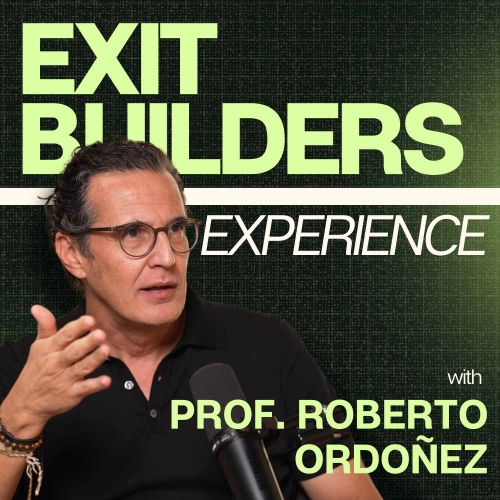
In this episode of Exit Builders, host Adel explores the mechanics of elite communication and dispute resolution with Prof. Roberto Ordonez. Drawing from more than two decades managing multi-billion dollar joint ventures in the complex, high-risk world of international oil and gas, Roberto explains why treating a negotiation as a battleground guarantees you leave millions on the table. He breaks down how to construct strategic empathy, handle cognitive blind spots, and de-escalate emotional deadlocks that paralyze corporate boards and prominent family enterprises.
Whether you are navigating an exit, restructuring supply chains, or handling internal friction across your executive team, this episode delivers a blueprint for converting standard transactions into sustainable, high-value partnerships.
Approaching a negotiation table with your armor on creates defensive counters from the other side, instantly cutting off the flow of valuable data. Elite negotiators stay approachable because they understand that the most valuable capital at the table is clean information. You cannot build a durable solution until you have accurate visibility into the other side's real incentives.
The smarter an executive is, the more likely they are to suffer from tunnel vision and confirmation bias. High-stakes dealmaking requires an external advisor to act as a cornerman—someone positioned up on the balcony who can observe the macro picture, spot structural blind spots, and keep tactical execution aligned when egos take over.
Price is merely what you hand over; value is what you actually secure. Squeezing a supplier or joint-venture partner for a short-term margin victory creates built-in incentives for them to cut corners or retaliate down the road. True negotiation mastery focuses on expanding the total value footprint rather than fighting over a static piece of pie.
"If you go into a negotiation thinking that you understand the problem, I am sorry to tell you, you're delusional. Good negotiators don't want to scare you. They want to be approachable because they want your trust. We need to transform our mindsets from the need to persuade to the need to understand." — Prof. Roberto Ordonez
[00:00:00] Thank you very much for making it today and taking the time to join us Maybe we could start by giving us a background about who you are, and also please mention the award that you won, uh, the past, uh, couple of months or two months ago.
[00:00:15] Well, first of all, thank you for the invitation. It's a pleasure to be here. what I can say about, uh, I'm what you call the strategic negotiator a negotiation strategist, and what I do is I help. Companies, uh, governments, big families in the region with, uh, complex negotiations and with conflict, difficult strategic, important negotiations basically.
[00:00:42] And I'm a strong advocate for of education, I believe in, in continuing education. And I love to teach. So I spend about half of my time doing, uh. Corporate training to, uh, companies and, and governments. And I also teach at universities. I teach at, uh, Georgetown University. I teach at, uh, Northwestern University, ESAP, uh, the Central European University and Hult, business school here around the region because I'm a strong believer that, uh, negotiation, conflict and, effective communications are the key.
[00:01:19] Key tools that every leader must have and the value that you can add. It's, uh, it's enormous. So I'm a big believer that that's something that we ought to strive to acquire. So, about that award is, uh, no, I recently, I was awarded, uh, a Professor of the year award at, uh, central European University. It's, uh, it's something very, very special, very emotional because it's a, it's a very important university in Europe.
[00:01:44] to be recognizedin that category, I'm not an academic. My business is not teaching. I teach universities for, for legacy, for passion. I do teach, uh, corporate companies and governments for, that's part of my business. But university is something that I, I never sought to teach.
[00:02:00] Uh, teaching found me in a way. I'm talking about university. So it's, uh, very special to have been, uh, recognizing that in that capacity. this is exciting to be recognized for an effort that you have put in place, even though you are, you are more of an executive or an operating executive than a teacher for a formal teacher.
[00:02:21] What got you into negotiations? What made you, pick this field and stay focused at it for so many years? I think life. I get asked many times, how did you get here? It's like, it's life. you don't plan to become the negotiator. It's the sort of thing that life guides you there.
[00:02:38] It's like. Throughout my career, companies started supporting. You have a special kind of talent where you can, you can connect people, you
[00:02:46] can..., uh,
[00:02:47] you can build trust quickly. And that's a, and I don't see negotiations as trying to convince people. Persuade people. I believe negotiations are problems that require a solution, and I strive to understand the other party so that we can solve this thing together.
[00:03:06] and no one, this is not a, a thing that came from a very big, uh, course in negotiations or, or, uh, or particular training. It came through through life essentially. how do you communicate better .
[00:03:20] and companies,
[00:03:21] I was, I did corporate for a long time. I did over 20 plus year, mainlyin oil and gas, multiple oil and gas company major operators, and I was
[00:03:32] picked in multiple situations where I needed to, convince, uh, stakeholders, partners of, um, big development projects that go beyond just the transaction, the money it goes into,building things, big things together, uh, complex with high risks, high uncertainty. That requires a going beyond this like, this is a great idea, let's do it.
[00:03:53] it's more building a, a trust and, uh, Getting people to be comfortable with making large, large investments. So I got a kind of, and I loved it. It's, uh, it's, it felt natural to the point with when, uh, when time came to, uh, I was an expert. It was time to move and go somewhere, different country.
[00:04:13] And I, I fell in love with this region. I was in a, in the time and I chose to listen. I, I want, this is what I wanna do there. The rest of my life. And I, I quit, I sort of jump up of a plane with one parachute. I said, I'm gonna follow my, my passion. And I started a company that, that does that essentially advice advise, uh, companies and governments with difficult negotiations.
[00:04:39] And then I got, later on, I got into training because, uh, when you teach mainly CEOs and high executives, they say after you complete the negotiation, the conversations well. I like the way you approach negotiations. It'd be great. If people in my company negotiated in this way, it would be my people in procurement, approach negotiations in this way.
[00:05:00] It'd be great. My people in sales or in business development. Can you teach my, my company? And it's like, well, it's, uh, yeah, of course. So I kind of got into, into, into the corporate training space, not by, not as a plan, but more as a consequence of the advisory and then the, the universities. It was, uh. it found me.
[00:05:20] Essentially I ended up teaching at Northwestern University as an, as a, as an experiment. It went well and then I got started getting invited by two other universities and now it's one of my, it's one of my greatest passions, even though it's not, uh, I don't spend a lot of my time 'cause it's not my business.
[00:05:36] I do it for, I do it for passion, but it's, uh, it's something that keeps me connected. I think you can, you can have great impact. Uh, it allows you to leave a legacy in a way. It's, I think negotiation is the sort of thing that you want, you want to maximize the, the awareness of, uh, because of the great impact that you can have.
[00:05:57] It's, uh, also starting in the oil and gas industry, how. I'm assuming it was a pure corporate role that you were in. Yeah. how can you take what you learned over there and then apply it to the rest of the industries and sectors?
[00:06:14] the advantage is oil and gas is, is a very complex industry. You have, you deal with. multiple stakeholders and, uh, obviously the, the ticket prices are, are quite large because of oil and gas. You're talking in millions and hundreds of millions and billions. And, uh, the type of stakeholders that you have are multiple.
[00:06:32] You're dealing with governments, uh, you're dealing with, uh, multiple. You don't never do these projects alone. You always do the multiple partners, other companies that partner up with you. Uh, you have to deal with NGOs. Uh, you have to deal sometimes with non-state actors that, uh, don't want you to around.
[00:06:50] So it's, it's a very complex environment where. it is kinda like, like New York, if you can, if, if you can make it here, you can make it anywhere in New York. Yeah. Yeah. Oil and gas is, is is kind like, sort of like a New York for negotiations. If you can negotiate oil and gas, and again, it's not, it's not just transactions, it's you're negotiating ideas, you're negotiating, um, developments.
[00:07:12] You're negotiating b investments. It's not just you are buying and selling things, it's, you're, you're convincing people of a, of a. Of major developments and things that will make a difference in their countries. And that's, that's important. And what, since, so what you're saying is that because of the high complexity that the oil, gas and gas had, you could see, that there are many commonalities or common denominators between.
[00:07:39] The oil and gas industry and every other industry. Oh yes. 'cause it just gets simpler after that negotiation at the end of the day, is human negotiation. Is human interaction. Mm-hmm. It's not, uh, as simple as that. It is like people mystify negotiation. And that's part of the reason people tend to be afraid of negotiations.
[00:07:55] It's like because people see negotiations as a fight. It's a battle. Uh, so I need to go. I'm going to fight and this is a do or die and I need to convince you and I need to do whatever it takes to, uh, because it's, it's about surviving kind of a thing. And that's part of what, what people usually don't like negotiating mm-hmm.
[00:08:13] Or tend to stay away of, of, or when they go, they go feeling that, okay, I need to put my helmet and grab my rifle and going to go into battle. Man negotiations are, they're just problems. They need a solution and, uh. And, uh, but guess what is, you need to solve it together. Two, three more people, however many stakeholders you have.
[00:08:33] More stakeholders with the more complexity but you need to be very aware that you don't understand the problem. if you go into negotiation thinking that you understand the problem. I am sorry to tell you, you're delusional. And this is why it's, it's sometimes complex to, to advise,top executives because they, they're very smart.
[00:08:50] because they're that smart, they have the idea that, okay, I understand. I know it. It's, and that's what you have to sue as an advisor. Say, listen, no, you don't. There's things, there's lots of blind spots. There's things that you're just not seeing where, um, It's problem, it's a, a problem to solve it, you need to understand it. And to understand it, you need information and you have part of the, you know, part of the problem, you have part of the equation, but a lot of that information is across the table. And unless you, you have the right attitude, unless you have the right mindset to, uh, to build the, the atmosphere, the, the comfort that the people can share information
[00:09:27] Can tell you about their interests, what's important to them. It's very difficult to solve the problem 'cause people will constantly be afraid of you. It's like you have this idea of negotiators, this big, uh, tough person that goes and banks on the table. And I think, movies having helped in building that, uh, have helped in building that, that idea.
[00:09:47] good negotiators actually don't want to scare you. They want to be very approachable because they want you to be trusted. and because you're trying to understand the problem. So it's that approach translates industries. That's not oil and gas. That's, that cuts across.
[00:10:02] That's part of what I get into education and teaching because I want to, I want that message to be out there. It's like there, there is a better way to engage in negotiation. There is a more productive way to not leave value on the table, but it requires a different mindset and it requires you to approach negotiations in a different way.
[00:10:19] This reminds me of, of situations where, because when I started my career, I was, I did a few years of sales and the assumptions was that negotiating is like haggling and then, it's an art of deception, right? Mm-hmm. So, but the truth is it has to be a win-win situation. Yeah. Yeah.
[00:10:41] You're absolutely right. we live in the Middle East and Middle East is haggling, is. It's part of the culture. It's almost like a game, you know? And, and when you negotiate here, if you don't haggle a little bit, people will be disappointed because, listen, you're not playing the game. But, but it's a very unproductive game.
[00:10:57] I mean, you, you need to play it to some extent because that's, it's ingrained in the culture. I'm Colombian, I'm Latin American. So Colombians have the same, I mean, Colombians, I say Colombians have a. We have lots of similarities with a, with Arabs or Latin Americans, and it's obviously the Arabs
[00:11:12] were in Spain for hundreds of years and, uh, and so it's not that Arabs are like Latins is Latin, are very much like Arabs. That's kind of where I got my nose from at the, a lot of, uh, Arab load in the system. Uh. Yeah. It's, it's not haggling. Mm-hmm. Haggling is, uh, if you have that idea, then you will be losing, leaving always value in the table.
[00:11:34] and the worst, the sad part about it is that the value that you leave in the table is not that the other, the other person took it, at least somebody took it. No, it's lost. Mm-hmm. It's like, it's like going under the, on the bridge in the water. and unfortunately. If you are not aware of it, then you walk out believing that, uh, you did great.
[00:11:55] The other party might walk out feeling they did great. That will be good. but what you're not realizing is so much value you could have created and it was lost. And this is, this is, this is, for me, is a, is a big, it is a big frustration. And I saw it, I was, uh, my last, uh, or one of my last corporate jobs was I was the, the CFO, the, the finance guy for a very large oil and gas company in, in Oman and as the CFO then, well, supply chain, it's part of it can reports to you.
[00:12:25] So you engage in seeing all these transactions after big transactions because it's oil and gas. Mm-hmm. And you see the, the amount of money that is, that is lost because of the way. You approach negotiations because of this idea that it's about, it is, it's a push and pull. Huling, it's, uh, I'm bigger than you.
[00:12:42] I'm the, I'm the strong oil company. You have to, I'm your biggest client. You have, it's not that, you have to understand is companies are in the business of doing what they do. Mm-hmm. suppliers are in the business of making money, helping you do what you do. So if you, if you, uh, you take advantage of the supplier.
[00:13:02] you just put the seeds for that person or that supplier to get even with you at some point. And it's, it's just not, it's just not a good idea. You don't want to, you want negotiations to, to be where both parties walk saying, I wanna do business with you again. It was a pleasure doing business with you.
[00:13:17] It. You treat the other person, not as, as your combatant, but as your partner. It's, you are my partner, we're building a solution together. It's, this is kind of the mindset that you want to have in a, in a negotiation. And it's, that's the kind of, mm-hmm. That's the switching of the mindset. I keep talking about.
[00:13:34] what you're saying is beautiful. Uh, however, like in my experience, it's been always, even when I go with a, with a good faith in a negotiation, it's difficult or takes time, number one, to build trust and it's difficult to get the other person as well to think the same way. Common value, I'm not your enemy.
[00:13:55] and we need to, uh, create a win-win situation most of the time. My experience has been is that they, they don't ease in even when they easen. There is a sound, especially in our region here, there is a, a voice in their head that tells them, no, go back to the way you are.
[00:14:12] You know, it's not be defensive. You need to win. It's a win. It's, it's not, it's not easy. You're right. but I'll tell you one thing, it's, it's because of you, you said the key words about trust. Building trust is, is not easy. And, you're Arab, I'm Latin. We are, we've been born and raised with this idea that, uh, the world is against you.
[00:14:33] and negotiations. Get into your identity. When you, if you do something bad, a negotiation, it says something bad about you as a person. Mm-hmm. So it's your, your identity and you don't wanna mess with your identity. So you are like always protective. but I tell you from experience that once you build that trust, people want that.
[00:14:55] and building trust is, I'll give you one of the simplest, uh, and this is not a trick, I don't believe in tricks in negotiation, but one of the, the very simple things that you need to do is you just need to listen. Mm-hmm. We as humans Have this necessity. Of people to listen to you. And listening means really listening.
[00:15:18] I'm not listening, going with your head like this and looking to the eyes and I am listening. And then when you finish, you say you respond, uh, immediately. 'cause all you're doing is you're just kind of like judging what you're saying and getting ready to respond. That's not listening, that is, uh, but that's how we are.
[00:15:31] So when you do that, no one's gonna be surprised. I mean, that's expected, but uh. But if you don't do that, if when the person finishes, oh, let me, let me get this straight. Um, what you're saying is this, I'm sorry, what you're saying is this and this. And you think you are maybe upset because of this, or you think this is wrong because of this?
[00:15:52] Uh, did I get this right? And, uh, if you didn't, can you tell me more? Mm-hmm. You confuse people when you do that in a good way. Say, oh, what just happened? This person actually. and if you do that enough, the other person slowly starts realizing you're not there to, to take advantage.
[00:16:13] And everybody wants the negotiation. And you do it in a way that you always, you do it in a way that you don't expose yourself. And I said being, being, uh, expressing your interest, your, uh, priorities, being a little bit vulnerable in negotiation is important. Now, don't go all the way saying, the maximum price or the minimum price I can do is this, because that's, it's like not telling you to go naked, uh, running naked into the park.
[00:16:39] but if you do it in a smart way, in a strategic way, being in strategically empathic is very powerful. It gives you, gives you a, gives you power, allows the other person to trust you. And, and one thing is important about trust. Once you're given trust, trust is to use it in a good way. It's not to take advantage of the other, because the other is very afraid of giving it to you.
[00:17:03] If the moment is given to you, you take advantage of it, goodbye, that you're never scaling, that, you're never gonna ever see that trust ever again. It's how do you build it? How you cons, constantly build it, and it changes the entire dynamic of the, the negotiation. Once the person realizes that you're not there to take advantage, you're not there to, to walk out and squeezing them, but you're there to help me, help you.
[00:17:27] Tell me more so that I can help me understand you, so I can help you if I, if I understand what's important to you. Well, I can design a solution that is gonna make sense to you if you don't tell me. Well, I'm not a mind reader. I'm gonna solve it with what I think is important to you, and I'm very totally wrong.
[00:17:45] and then I'm gonna be wondering why you said no. And, and, and I'm gonna start saying your. You are being difficult or you're being irrational, you're not getting it. It's not that you're not getting it. It's like I'm just giving you a bad solution in your head. but that's because I don't know what's important to you.
[00:17:59] So help me help you and let's help each other and let's find a, let's find a solution together. It's not magic, it doesn't have it immediately. It. But if you build environment to that and you start building a reputation as a negotiator that that's the way you operate, then people start, start knowing this is the kind of guy, or this is the kind of, and if you do it as a company, then people start treating you as a company as well.
[00:18:21] this is the kind of company they negotiate differently. This is why I say it's important for companies to, and I'm working on this, uh, on, on a program at the moment for this, how do you change the. The company culture around negotiation. So it's more consistent across, and you become a, you become the kind of company people want to do business with and it becomes a competitive advantage because this is the way you do business.
[00:18:46] And I'm building on a, right now, as we speak, I'm building a, a program, sort, like a capacity development program for that, for companies because I think it's very powerful. And so that. You build reputation a way. You also, uh, to build trust. Building on the, on your answer. To build trust. You also created a tool, a thinking tool, the framework that you ran.
[00:19:10] We had a workshop with Stanford Alumni Club here in Dubai, and you shared it with us. That was, for me, that was a very pleasant way of creating a connection with the other person. I didn't expect it to be that easy. Now it's easy to write it down, but it's not easy to open up. I think it's negotiations and this is, uh, can't get as complex when you say it.
[00:19:37] And that's what the tool is for, is a three dimensional. They have a, there's a strategic part where you have to see all the, getting to the helicopter and see all the players and all that. And then you have to get creative and uh, and look for solutions. And then you have to get tactical. But how do you, how do you integrate in all that?
[00:19:53] Into your head is kind difficult. You say three dimensional. You're thinking about Google. You have to get some, uh, Google glasses to see it in 3D. That tool is a visual tool, and it was created actually by a good friend of mine in, uh, in, back, in, back in Colombia. it's a very visual, smart way to integrate, all three dimensions into a single page.
[00:20:13] So it's, I've developed it since,to sort of, uh. Accommodate to my, uh, my style, but it's, it's just a way to, to bring all these dimensions into a single tool. And, uh, it becomes sort of like, almost like a control panel in the, in the negotiation. it's very powerful and very simple. And how, now just so that we have a, a better context of the process. Can you share with us, like how does, your engagement with a company, let's say I have my own company, I'm responsible for, the engineering department. I'd like to get a good deal with, uh, suppliers. Mm-hmm. we're taking away a legacy system and we are bringing a new system in such a situation.
[00:20:57] It doesn't have to be the same, but yeah. the actual process is, it's, is the same for the negotiation from buying a car to buying a company. It's, it's, it's obviously the, the more, the bigger the, the more complexity. But the, the thinking and the sequencing should be fairly similar. And you always start, the most important thing in negotiations is preparations., there's research bymy school at, at, uh, Northwestern, from Kellogg.
[00:21:27] That says 70% of success in negotiation comes from good preparation. But people say, oh yeah, of course prepare. Of course we prepare. But preparation for most people means building up your argument and building all the PowerPoints and the Excel models documents, whether used to say, I am right, but this is what we're trained to do in business school.
[00:21:51] Yeah. And this is, I am right. And, uh. No negotiate preparation is, yes, you need to know what you, what's important to you, but it's also just as important to understand what's important to the other parties. So preparation goes into the space of, okay, let's, let's try to understand the problem. who are the players?
[00:22:12] who are the actors? And, and, and chances are. He goes way beyond the person in front of you on the table. That person might be just be an agent or the guy in procurement or the, there's many actors in the in in bigger negotiations, government negotiations, or there's decision makers that are influencers.
[00:22:29] I mean, you almost never talk to the decision maker until the very end. Uh, and sometimes when they're with big companies, you never talk to the decision maker, but there's lots of influences that have the ear of that decision maker, that which are more accessible. So who are those people and, uh, and what's important to them?
[00:22:47] Uh, there's people that will be implementing, whether you're trying to do. They have different interests and potentially the, the person that you're talking with, there might be people that want to block it. There might be people that this is a bad idea for them, and they'll never tell you that. They'll just be smiling in your face, waiting for you to, to go to the toilet, to, uh, to essentially throw a grenade into the negotiation.
[00:23:08] And, uh, so it's like, who are these people? and understand what's important to them. What are their priorities? What's, uh, what are their interests? And what you need to realize is that everybody in the table, you think they're all looking, have the same interests. They don't. Every single person has their own.
[00:23:24] so understand what those are. and you have to do it initially by your, your guessing you're making assumptions, but at least you're trying to put yourself into the, in, in the other side of the, of the table. Then I understand the power balance. Okay, we have a plan B, it's a good plan B, if it's not, please don't go to a negotiation table.
[00:23:42] You'd be crushed. So you do all that. You spend, depending on the negotiation, can be a day, can be a week, can be. Essentially mapping all these actors, mapping, doing all this. It's a very, it's a very intense, intense process, but it's super critical and people don't do But then you have to realize everything that you did is pure assumptions.
[00:24:03] You need to corroborate those assumptions. So now you have to build a plan to go meet the people that are relevant and you need to understand. Okay. There needs to be a sequence. Sequencing is very important. in
[00:24:12] Negotiations
[00:24:13] who do I talk to first? Who do I talk to second? And you, should have to go to the
[00:24:17] end and, and,
[00:24:18] and backtrack, where do I talk to them when?
[00:24:22] So you build a strategy for meeting with all these people. And then when you meet with all these people, you go into one of the most difficult, sessions in negotiation that just is now you need to exchange information and you, and people are not. Used to exchanging information. So you go and say, listen, I want to share what's important to me, and I want to know what's important to you.
[00:24:43] And people look at you like you came from Mars. Like, I'm not telling you anything because people are afraid of you. So I say, okay, but you've done your homework. So you, you spend some time at least, trying to understand what is, I said, listen, you don't want to tell me, but let me, we've been doing some homework, so let me tell you what I think is important to you.
[00:25:02] And trust me, nobody likes to hear what's important to them. No, no, no. That's not what's important. That's what I think is important to you. So that's not what it is. Tell me what it is, because I'm going to build a solution assuming I'm right. If I'm totally wrong, I'm gonna build the wrong solution. So you start having those conversations and not easy conversations, but you start breaking that ice and you start getting, getting real information.
[00:25:24] And once you have all that, at least now you have a much better understanding of the problem. And this is when you start building solutions. But you don't build solutions until you get done that. And then once you have solutions, then you go to the negotiation table and that's when you do all the, all the tactical and the first offers and all the persuasion, all that.
[00:25:43] But that's the very end. People tend to just go straight to the negotiation table. with the preparation that they, that they did, and essentially, why am I right? and then they wonder why did I, why did they say no? because you, you just, you didn't, you need to build a strategy.
[00:26:01] If your strategy, I'm just gonna convince you that I'm right. That's a horrible strategy. I'm sorry. And, and then you're on, you're relying on power and you're relying on, yeah. if you are. If you have a lot of power, if I put a gun to your face, you have to say yes. But that's, but you're, it's a very short term solution.
[00:26:20] You say yes, but then, uh, then afterwards you want to get even and, and trust me, life is long. Mm-hmm. Things change. You wait, you, things will totally, you, you come back again. Yeah. I say, listen, and this is a technical term. Shit happens. Mm mm-hmm. And this is a technical term. Yeah. Yeah. There is no way you can anticipate everything that will happen in the next 10 years, 15 years of a, of a typical negotiating contract.
[00:26:47] Mm-hmm. No way you can put that in the, in, in the terms. Your only insurance policy is having a good relationship with If you don't have it, took advantage at the beginning. People will remember. And they'll just be waiting for you. The moment you say, I need your help, it's like, ha.
[00:27:06] Yes, of course. And this is when it goes. And, but what happens is when that happens, you never connected to the, not thinking about it five, 10 years before you, at that point, you forgot about it and you say, well, but it's happening now. If you had done it right, you would not be having that problem. And this is when the value that you might've.
[00:27:29] Capturing day one. You totally destroy it throughout the time. So this is not, don't do that. Don't create incentives for that build going to negotiations where you can walk out. The other party is a good partner and shit will happen again. Mm-hmm. The, sorry, technical, but the other person said, no, I'll help you out because that's what partners do.
[00:27:53] And that's, uh, that's kind of like how you want to approach the type of a mentality you wanna have in You know what's funny, while you are talking, pictures keep playing in my head, memories, people, situations. You're absolutely right. There are so many of these situations. By default, we just want to compete.
[00:28:11] Yeah, no, it becomes, it turns into an art of deception rather than, I'm a super competitive person, I love sports. Mm-hmm. And I'm very competitive in sports. But that's the place to be competitive. Yeah. Yeah. it's important inthe business space, it's important to be competitive 'cause you need to, you need, competition, uh, is key to success in, in business.
[00:28:29] But in negotiation, you're building a partnership. when, when you, uh, I'm married. dated with my, when I started dating with my wife and then we got married a lot, I wasn't thinking how, how do I maximize my, because if you did that, trust me, the relationship would be really, really bad afterwards.
[00:28:49] Yeah. Yeah. it's a partnership is about, is someone you're gonna be working with and living with and most, a lot of business transactions all, they're more complex and, and they're more expensive to, uh, to terminate than most marriages. Yeah. Yeah. So don't, don't create the conditions for Sometimes I feel like in the example of, uh, a marriage,I learned from my wife sometimes not to negotiate. You shouldn't be negotiating to reduce the price. Sometimes negotiate to increase the value or get a better commitment, or it's, uh, you say it's magic. Mm-hmm. The point of negotiation is to add value.
[00:29:31] Yeah. It's not to reduce cost. Yeah. Yeah. It's that, that the thing, uh, Warren Buffet says, uh, says, uh, price is what you pay. Mm-hmm. Value is what you get. And you are in for the value, not for the price. Yeah. Because, uh, you can pay little and then every saving you did destroy completely or lose the, the upside of the value that you never capture.
[00:29:56] Because you never allowed the opportunity, and this is why, and this is we were you're telling me, you're asking me when, sometime in our conversations like, why, why would you hire, why would you hire negotiations advisor? It's like, what is, and it is a tricky question because negotiation is very ingrained in people's egos and, uh.
[00:30:15] People are totally okay, uh, hiring someone to help you with your strategy. You get McKinsey, you get b, c, g to help you with your strategy. Uh, you have a problem, you get a lawyer. you've totally okay getting an external advice because you need an external perspective. But when it comes to negotiation, it's like, no, it's attached to your ego.
[00:30:34] I'm a good negotiator, man. I, I know my stuff and people don't, have a hard time. Looking for? For, and the thing is that, like I said, I'm a Colombian, so I believe I'm a very good driver because if you drive in Colomb, you can drive anywhere and it's, it's tough driving. I think Egypt is the only one compared to it.
[00:30:52] And uh, but they're always blind spots. And the faster you drive, the more important not missing those plans are when you're negotiating something, the more important that the negotiation is. The more blind spots that you will have and blind spots will come in the same, in the way of, uh, emotions your tunnel vision.
[00:31:12] You're not seeing biases like cognitive biases of, uh, confirmation bias. You'll only hear information that conference your beliefs and you'll challenge anything that that doesn't. And, uh. It's normal, it's it's human. You, and, uh, you might be deceived by the solution because you, you're totally convinced that this is the way it's gonna happen.
[00:31:35] All those are biases. And, uh, and you need, like this, uh, guy called William Uri is a, is a Harvard professor. Negotiation says it's very important to go to the balcony. You need to go to the balcony, the balcony, and see the bigger picture. But for the people in the negotiation, it's difficult to go to the balcony because they're, it's like a boxing fight.
[00:31:59] If you're the boxer, you are in the fight. You are your focus is on, I need to punch you in the face. Mm-hmm. the coach that is on the sidelines is looking at how you're doing it and how the other guy's doing, and then fortunately, there's multiple rounds and in every ground you come and your coach says, listen, you need to do this.
[00:32:17] The guy's doing this. You get a chance every time the bell goes ding, you get some piece of advice. Negotiations are kind of similar. You need someone to be looking at the bigger picture and keeping you in perspective. It's not that you are a bad negotiator. Mm-hmm. Actually, if you're a good negotiator, even more reason to do that.
[00:32:39] If you're a good negotiator, you actually are aware that you need that. It's is that, egocentrical thing that I don't need any help. I know the problem and majority of the times when I get engaged, people are not proactive when they engage someone like me and the people reactive.
[00:32:55] I don't usually walk through the front door. I usually, parachuted on the, on the, on the, uh, ceiling because something happened. So I'm coming to do damage control. When you come, it's, it's an, it's a crisis and it's nine outta 10 is essentially because you thought you understood the problem and you didn't.
[00:33:16] it's just being aware of that is not, it's, it's a sign of strength to, uh. To re acknowledge that, listen, I need someone to help me see the bigger picture. It's funny, people are more, are more open to get people to train their, their employees because it's like, I know negotiation, but my people need help.
[00:33:35] So it's easier to, to get people to, to convince people to do negotiation training Yeah. Than it is to, to do advisory because it's like, I don't need advice, man. I, I, I got it covered. Yeah, it's, it's very interesting. in a situation, let's say,if I'm the CEO and I want to be able to, have you as an advisor on specific deals, whether I'm buying company, selling our company, there could be multiple scenarios, and also to be able to build some capability within the I don't want to always rely on you to come and be my advisor. So what's the optimal approach in building an internal capability? Well, one thing I think, and this is one thing that most companies don't do, companies have people within the organization that are like the negotiators. The people are good at negotiating and they rely on them to, you shouldn't rely on five people.
[00:34:35] Everybody in your company should have a, should have a, a, be, have a negotiation mindset. This idea, and by that negotiation, meaning it's a problem, it's a solution. I need to understand the other party. It becomes part of the culture. So I would say the ideal is to, to get companies to understand that.
[00:34:58] Don't rely on few people. Build a culture of a, of, of make negotiation part of your company culture. I'm say negotiation. Build a negotiation style as part of the company culture, and then people will talk about your company as the kind of company that negotiate in this. It's the kind of people you, your company you wanna negotiate with.
[00:35:19] It's like I said, it, it might even become a competitive advantage. Mm-hmm. You have choices when you, when you, when you choose your partners in business, well, you wanna do business with the people that you trust and the people you don't have to be constantly looking at your back to make sure no one stops is, is stabbing you in the back.
[00:35:36] when it comes to the, to the CEO is, is essentially being open to those conversations essentially. the end of the day, what you're doing is you're building teams. You're not doing it all. You are saying, okay, let's build a team, to do this. You don't negotiate alone. Big negotiations are not done alone.
[00:35:58] Are done with a team, and what you do is you build that team and that team has the senior management in it. it's, it's, it is a combination of multiple perspectives. That, that thrive season, all you're doing is, in a way, you're being a conductor and you're bringing all that knowledge that all the people that your CEO has, your CFO, your operas guys, procurement guys, you're bringing all that knowledge into the, into the team.
[00:36:25] Different perspectives, different interactions with the particular person. Yeah. Potentially different personal relations. With that, you bring something very strong to, uh, to negotiate.
[00:36:34] But now while you were talking, I thought, you know what? We get into negotiations when we do process optimization, when we split responsibilities between departments, when we get into a change management project. How does that, is there any difference in the approach or it's the same? I said, step back, negotiate.
[00:36:55] This is a, this is very, people think negotiation and people think transactions. buy sell. The most interesting negotiations have nothing to do with money. They have to do with ideas. They have to do with process. you. Implementing a process, then who does what? Uh, you have to involve multiple departments.
[00:37:15] Uh, you need, there's something in a way that you want to mean. The most interesting negotiations for me happen in, uh, is more than the internal negotiations within companies, within different departments, across departments, and within departments. Within departments who does what across departments is similar, who takes the own and, and.
[00:37:35] The way you want to do it. And there's another department that says, no, that means more work for me. Nowhere. And there's a, there's a bigger picture. There's what you're trying to achieve for the company. So those negotiations have not a single, they will transforming into dollars, but you're not negotiating dollars.
[00:37:51] You're negotiating ideas, you're negotiating, uh, those two me families. When you negotiate with families. I negotiate with lots of, uh, I help families in this region. You go in for money because we are negotiating. After a few conversations, you realize the conversation has nothing to do with money, has to do with, uh, two family members that, uh, hate each other because there's lots of history and bad blood from the, when they, maybe that comes probably when they were kids.
[00:38:23] And it's not that I don't, I disagree with your idea. I might love your idea, but I'm not gonna give you the benefit of, uh, of saying, I like your idea. I'm going to, I'm gonna crush it down. And then you have the, the CEO and the board trying to do something, and then family members in the board, the negotiation there has nothing to do with money.
[00:38:41] it's, you go down to more conflict resolution. You go to understanding the, the, the root cause of the thing. You go to solving that. those are the, the real interesting negotiations they want to have to do with, with people, with emotions, with. those are the, that's where complexity gets into negotiation.
[00:38:58] and people don't, don't see that as a negotiation. They see, no, that's, uh, that's other, no, that is negotiations, human interaction. that's a very important type of human interaction. And in part, like in this region. It stops, it, it freezes,board. There's boards of directors that are frozen because multiple family members, well, there's a lot of, uh, conflict and that that means I'm not agreeing with you.
[00:39:22] And, uh, and do you have a CEO with a very transformational plan that needs the board to be on board and nothing happens. And, and you have a, a deadlock scenarios where you're losing value. and it's all because. Nothing to do with money, nothing to, it's got to do with emotions. It's got to do with history.
[00:39:43] And that's, that's, that's a lot of what I do with, uh, with families is getting down. Let's go back to the, the root cause of the thing You see, it's like an iceberg. You see the, the tip, these two people fighting, why you go down and you see that thing, a big ice per down. But a lot of the ice refinery thing is, most of that has to do with.
[00:40:03] Perceptions, uh, misunderstandings that if you just have the right conversations, you're, I thought you were, I thought you were like this. No, you seem people need to demystify the people they hate. Mm-hmm. The people you hate. You, you go into what you call a negative. All right? Which is everything that you says.
[00:40:21] I gonna take a, a negative, uh, perspective. It's like, if I hate you, you say, Hey, nice shoes. He's trying to, he's making fun of my shoes. Mm-hmm. No, I like your shoes, man. So it's, you need to demystify the people you hate. Why do you hate, why do you hate them? And, and then go back and challenge those assumptions.
[00:40:38] And you, you might just realize that there's no reason to hate you anymore. And that's when you start connecting the pieces and that, and this, that is a negotiation. People don't see it as a negotiation. That's, that's an important But people don't see it as because people, you need to redefine what negotiation is.
[00:40:57] when is the right time to involve an advisor like yourself? What situations are required? Because not everything, there could be, most situations would be an overkill to bring someone of your expertise, one thing is wolf. Be proactive.
[00:41:15] Basically you are, you involve someone like, like me when it's, it's high value. There's value to be created and it needs to be certain value, so to, to justify the, the cost of an advisor. if you train your people to be good negotiators and you don't negotiations about being proactive, you don't.
[00:41:37] It is easy to solve problems before they occur. Solving the problems when they are happening is a lot more difficult. So it, but you need people with the right kind of mindset that see negotiations as collaborative, uh, solutions so that when negotiations start, they, they start approaching the, the counterparty with that approach.
[00:41:57] And if you do that, then. Likely if the, if the negotiations are normal negotiations, you need to, uh, to involve someone like me if the negotiation is large and, uh, and it's like, listen, the cost of the advisor, it's in a 0.0 0, 0 0 of the, of the actual value of the negotiation. Why not? it's like I have blind spots.
[00:42:21] Why would I not? I'm driving fast. Have a nice car. why do, would I not? If you can have someone and, and tell you there's a car here, there's a car here, well, you probably have less, less chances to crash. So if it's negotiation important, has had value, especially if can you, if missing something is going make you lose a lot of money.
[00:42:48] Get some, get to reduce the risk. Get not, not me, get someone like me, get an advisor. To help you identify those blind spots. You just need someone out there to look for those blind spots. Protect you. Yeah. Don't put your EI mean, it's, it's not that you're not a good, actually makes you a good negotiator.
[00:43:04] Being aware of that makes you a good negotiator. You say, listen, if I, if missing a spot is gonna cost me multiple millions of dollars. get some help. It'll cost you a lot less than that. Yeah. Yeah. And also will make you, in the process, you become a better negotiator and negotiations is an everlasting skill.
[00:43:25] Mm-hmm. You're constantly learning negotiations it's a, like most skills is a's a never ending journey. Mm-hmm. Negotiations are never ending journey. You're constantly learning because you constantly have new experiences and you constantly say, oh shit. yeah. There's tweaks that you, you have to do.
[00:43:40] So, yeah. Value, if there's value that you are likely to lose Or lack or value that are likely to acquire by getting someone to help you out. If that value is important, get help. And by the way, you don't need to tell people that you get Yeah. Part of a part of what, like is, for example, people tell you who are your clients?
[00:44:01] I, I don't get to tell anybody. Yeah. Because most negotiators. Work in the in, you don't tell anybody who you work for. So, so you get to claim the credit. The negotiator is always,it's, uh, it's always in the back. You don't, uh, it's sort of like a silent warrior helping you out, but you're the boxer.
[00:44:19] No one is looking, when Tyson wins, no one is saying Tyson has a great coach. yeah. People say. Tyson has a nice, has a, he is a good fighter. Yeah. But if Tyson doesn't have a good coach, he wouldn't be Tyson. Yeah, yeah. True. Simple as that. So it's, uh, it's just, uh, being aware of that.
[00:44:35] Excellent. If there is value, get some advice. The same way you get advice in strategy, the same way you get advice in conflict. Amazing, amazing. 50 years from now, what do you want people to remember about you?
[00:44:51] I'm a, I'm on a mission and my mission is to change people's negotiation mindset, people's approach to negotiation. It's changing this idea that you, when you negotiate, you go you, you going into a fight that is about persuasion, that is about,
[00:45:11] uh,
[00:45:13] power and, and,
[00:45:14] and
[00:45:14] pushing the other person to commit.
[00:45:16] It's moving people, transforming people's mindsets from the need to persuade to the need to understand, understand the other party because you're solving a problem. That has become my mission in life. That is why I teach. That is why we're doing this, is to deliver that message. I want people to, in 50 years or to, if there's one thing they, if you can, did a little bit of contribution to the world.
[00:45:43] Man in the world that we're living these days with all the,
[00:45:47] the
[00:45:47] geopolitics that we have around this region, we need better negotiators. And that's, my
[00:45:51] that's, that's my mission.
[00:45:53] Amazing. I mean, there will be, there will be more wins than, uh, than, uh, the bad situations where we're talking about more wins. Less conflict.